1. What is a mid-drive motor?
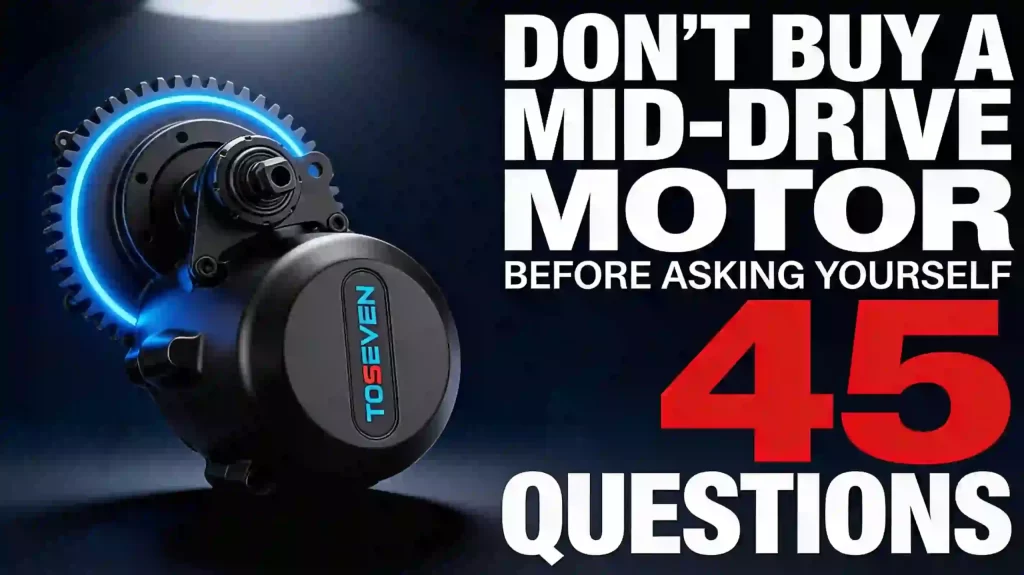
A mid-drive motor is an electric motor mounted at the center of the bike — at the pedal axle. Instead of spinning a wheel directly, it drives the chain and uses the bike’s own gears to move you forward. This makes it smarter and more efficient than a wheel-mounted motor.
2. Why is it called “mid-drive”?
Because the motor sits in the middle of the bike — right between the two crank arms, at the bottom bracket. This is what separates it from hub motors, which are mounted inside the front or rear wheel instead.
3. Why should I get a mid-drive motor?
A mid-drive motor is the better choice if you ride hills, carry loads, or want a ride that feels natural. It uses your bike’s gears to stay efficient on any terrain, delivers more climbing power per watt than a hub motor, and keeps the bike balanced because the weight sits low and central. A 250W mid-drive can deliver roughly the same effective torque as a 750W hub motor while consuming less battery.
4. Why are mid-drive motors more expensive than hub motors?
Because they are significantly more complex to design and build. A hub motor is essentially magnets and copper wire inside a wheel — straightforward to manufacture. A mid-drive motor contains precision planetary gears, an integrated crankshaft interface, a torque sensor, and sophisticated electronics, all packed into a compact housing. That engineering complexity — plus the R&D behind firmware and frame integration — is what drives the price difference of roughly $600–$1,000 on comparable bikes.
5. How does a mid-drive motor actually move the bike?

When you pedal, the motor adds its own rotational force to the crankshaft. That combined power travels through the chain and cassette to the rear wheel — exactly like normal pedaling, just with a powerful electric boost behind every stroke.
6. Is a mid-drive motor better than a hub motor?
For hills, off-road, and long distances — yes. Mid-drive motors use the bike’s gears to stay efficient on every type of terrain. Hub motors are simpler and cheaper but lose efficiency quickly on climbs and cannot adapt to changing conditions the way a mid-drive can.
7. What kinds of mid-drive motors are there?
There are four main types:
- OEM (Original Equipment Manufacturer) Motors built directly into complete e-bikes at the factory, fully integrated with the frame, display, and firmware from day one. This is the most common type found in ready-to-ride e-bikes sold in stores.
- Cargo / Heavy-Duty Motors engineered specifically for bikes carrying heavy loads, children, or cargo boxes. These prioritize sustained high torque, thermal stability, and robust frame integration over compact size.
- MGU (Motor Gearbox Unit) A sealed unit that combines the motor and a multi-speed gearbox in one housing. Eliminates the external derailleur entirely for an ultra-clean, low-maintenance system.
- DIY / Retrofit Kits Motors designed to convert a regular bike into an e-bike. Cost-effective and customizable, but require self-installation and a compatible battery and display.
8. What is Newton-meter (Nm) torque, and why does it matter more than Watts?
Torque (Nm) measures the rotational force the motor applies — think of it as the twisting power that actually pushes you up a hill. Watts measure how fast that force is delivered, which mainly affects top speed. For real-world climbing and load-carrying, a motor with 85 Nm will outperform a motor with 60 Nm every time — even if the lower-torque motor has higher wattage. Nm is the honest number; Watts is the marketing number.
9. How much torque does a mid-drive motor produce?
Most mid-drive motors produce between 70 Nm and 120 Nm of torque. Entry-level urban systems start around 40–50 Nm, while high-performance trail and cargo motors regularly exceed 100 Nm — enough to climb very steep gradients fully loaded.
10. Does a mid-drive motor use the bike’s gears?
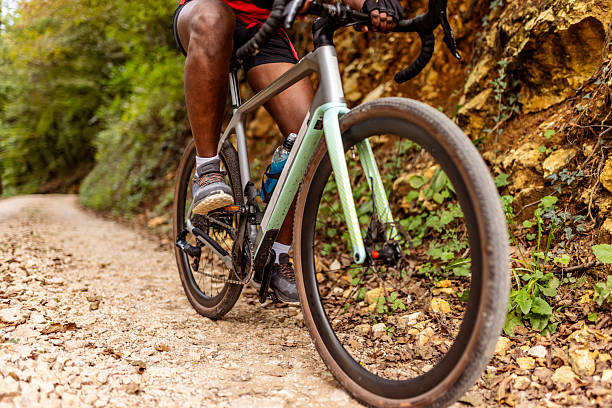
Yes — and that is its biggest advantage. By shifting to a lower gear on a hill, the motor stays in its efficient RPM range while the gearing multiplies torque at the wheel. This is why a modest mid-drive motor outclimbs a much larger hub motor.
11. Does a higher wattage mid-drive always perform better?
Not necessarily. A well-engineered 500W mid-drive with strong torque and good firmware will outperform a poorly designed 750W system. Torque output in Nm, sensor quality, and thermal management matter far more than peak wattage numbers on a spec sheet.
12. Why does a mid-drive motor feel more natural than a hub motor?
Because it works with your pedaling rather than pulling or pushing the wheel from the outside. The motor’s output blends into your pedal stroke, so the bike responds to your effort — giving you a feeling very close to riding a regular bicycle.
13. How much “push” does a mid-drive motor give you — am I cheating?
On Eco mode, a mid-drive reduces your required effort by around 30–50%, meaning your heart rate and calorie burn are still meaningfully high — comparable to a brisk walk. On Turbo mode, your effort drops to roughly 20–25% of what a regular cyclist would exert, bringing the physical demand closer to a casual stroll. So yes, you are getting less cardiovascular exercise per kilometre than an unassisted rider — that is simply the honest truth. However, research consistently shows that e-bike riders compensate by riding significantly longer distances and more frequently than they ever did on a regular bike, meaning total weekly exercise often ends up higher, not lower. The motor does not remove the health benefit — it redistributes it across more time in the saddle.
14. How far can I go on a single charge?
A typical mid-drive e-bike covers between 50 km and 120 km on a single charge, depending on battery size, assist level used, terrain, and rider weight. Because mid-drives are more efficient than hub motors, they generally squeeze more range out of the same battery capacity — especially on hilly routes.
15. What sensors does a mid-drive motor use?
A mid-drive motor uses up to four types of sensors working together: a torque sensor that measures how hard you are pushing the pedals, a cadence sensor that detects whether the pedals are rotating, a speed sensor that monitors how fast the bike is moving, and a shift sensor that detects when you are changing gears. Premium systems use all four simultaneously. Budget systems may use only a cadence sensor and speed sensor. Each one plays a different role in how the motor responds to you.
16. What is a torque sensor?
A torque sensor is a precision measurement device built into the motor’s crankshaft. It continuously measures the exact force you apply to the pedals — dozens of times per second — and sends that data to the controller, which adjusts motor output in real time. It is the component most responsible for making a mid-drive feel natural and responsive rather than mechanical.
17. What is a cadence sensor?
A cadence sensor detects whether the pedals are rotating — using a small magnet on the crank — and switches the motor on or off based on that signal. It does not measure how hard you are pushing, just whether you are pedaling at all. It is simpler and cheaper than a torque sensor and is commonly found in entry-level systems.
18. What is a speed sensor?
A speed sensor is a small magnet mounted on the wheel spoke that passes a fixed point on the frame with every rotation. It tells the motor how fast the bike is currently moving. This is critical for legal compliance — in EU pedelec systems, the speed sensor is what signals the motor to cut assistance once the bike reaches 25 km/h. It also helps the controller decide how much power is appropriate at any given moment.
19. What is an assist level, and how do I choose the right one?
Assist levels are preset power modes — typically labeled Eco, Tour, Sport, and Turbo — that control how much help the motor adds to your pedaling. Lower levels conserve battery and give light support; higher levels deliver maximum power for steep hills or heavy loads. Most riders use mid-levels for daily riding and save the highest level for when they genuinely need it.
20. What is the difference between a torque sensor and a cadence sensor?
A torque sensor measures how hard you push and delivers proportional, dynamic assistance — it is intuitive and efficient. A cadence sensor only detects whether you are pedaling and delivers a fixed power burst — it is simpler and cheaper, but the ride feels more mechanical and less responsive, especially on hills or in traffic.
21. Is a cadence sensor ever the right choice?
Yes — for flat urban commuting or budget-conscious riders, a cadence sensor works perfectly well. If you ride on mostly flat ground, don’t need a natural feel, and want a lower-cost system, a cadence sensor delivers reliable and straightforward pedal assist without the complexity of torque sensing.
22. What is a shift sensor, and does a mid-drive need one?
A shift sensor is a small device on the gear cable that detects when you are about to change gears. It cuts the motor’s power for half a second — just long enough for the chain to shift cleanly. Without it, shifting under full motor torque stresses the chain and can damage the derailleur over time.
23. How is a shift sensor different from a torque sensor?
They serve completely different purposes. A torque sensor controls how much power the motor delivers based on your pedaling force. A shift sensor has nothing to do with power delivery — its only job is to briefly pause the motor during a gear change to protect the drivetrain from damage. Both work together in the same system.
24. Does a mid-drive motor have a throttle like a moped?

Most mid-drive motors do not include a throttle — they are pedal-assist only, meaning the motor only activates when you pedal. Some retrofit kits can be fitted with an optional thumb or twist throttle, but this varies by motor type and is restricted or illegal in many countries, including EU pedelec regulations. Always check your local laws before adding a throttle.
25. Do I still have to pedal with a mid-drive motor?
Yes. Unlike a moped or scooter, a mid-drive motor is designed as a pedal-assist system — it supports your effort, it does not replace it. The moment you stop pedaling, the motor stops too. This is actually one of its strengths: it keeps the riding experience active and natural rather than passive.
26. Does a mid-drive motor make the bike feel heavy?
The motor adds 3–5 kg to the frame, but because that weight sits low and central, the bike still handles naturally. Hub motors add similar weight directly to the wheel — which is far more disruptive to balance and handling, especially on turns and technical terrain.
27. Why does a mid-drive motor improve balance?
By sitting at the lowest point of the frame, it keeps the bike’s center of gravity as low as possible. A lower center of gravity means better cornering stability, easier low-speed control, and less tendency for the front wheel to lift on steep climbs — especially important on cargo bikes carrying heavy loads.
28. Does a mid-drive motor create drag when the power is off?
There is a small amount of drag, but it is barely noticeable in practice. Mid-drive motors use a one-way clutch bearing that physically disconnects the motor internals from the drivetrain when unpowered. The main thing you will feel riding without assistance is the extra weight of the motor unit — not mechanical resistance from the motor itself.
29. Are mid-drive motors waterproof, or just water-resistant?
Most mid-drive motors are water-resistant, not fully waterproof. An IP65 rating — the most common — means the motor handles rain and water jets from any direction but is not designed for submersion. Motors rated IP67 can survive brief accidental submersion in shallow water. No mid-drive motor should be pressure-washed regardless of its IP rating, as high pressure forces water past seals into the electronics.
30. Can I ride a mid-drive e-bike in the rain?

Yes — most mid-drive motors are rated IP65, meaning they are fully protected against rain and water spray from any direction. Everyday wet weather riding is completely safe. The components to watch are the display unit and battery connectors, which should always be properly seated and sealed before riding in heavy rain.
31. How long does a mid-drive motor last?
A high-quality mid-drive motor is designed for 10,000–20,000 km or more with proper care. The motor’s internals are sealed and factory-greased in most premium systems. The chain, cassette, and chainring will need more frequent attention since they bear the full force of the motor.
32. Does a mid-drive motor wear out the chain faster?
Yes. Because the motor’s full torque passes through the chain, wear is significantly higher than on a regular bike or hub-motor e-bike. Using an e-bike-rated chain and replacing it regularly — typically every 1,000–2,000 km — prevents cassette and chainring damage down the line.
33. How often should a mid-drive motor be serviced?
The motor unit itself needs a professional inspection every 3,000–5,000 km. The drivetrain — chain, cassette, and chainring — should be checked every 500–1,000 km due to the extra stress from motor-driven torque. Always use an e-bike-rated lubricant on the chain.
34. What is the most common reason a mid-drive motor fails?
The three most common causes are: (1) shifting gears under full motor load, which shocks the chain and internal gears; (2) overheating from sustained high-power use without rest; and (3) a worn chain left unreplaced, which transfers excessive stress back into the motor. Most failures are completely preventable with basic habits.
35. Is the motor loud? Will people hear me coming?
No — a well-built mid-drive motor is remarkably quiet. At low to medium assist levels, the sound is barely noticeable over wind and road noise. At maximum power on a steep hill, you may hear a faint hum from the internal gears, but nothing close to the noise of a moped or motorcycle. Most bystanders will not realize the bike is electric until they see it accelerating uphill with ease.
36. Can I remove the motor if I don’t want it anymore?
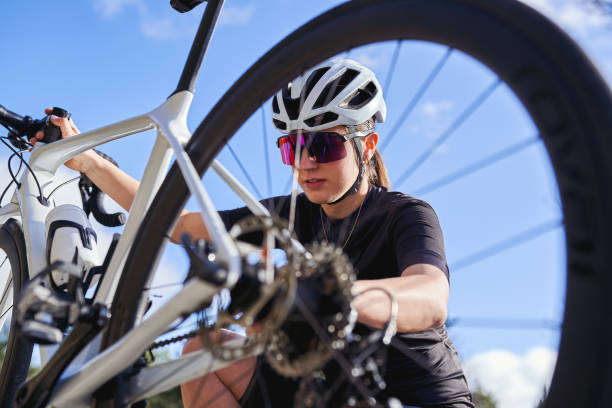
On a retrofit conversion kit, yes — the motor can be uninstalled and the original bottom bracket reinstalled, returning the bike to its standard configuration. On a purpose-built e-bike where the motor is integrated directly into the frame, removal is not practical, as the frame is specifically designed and structurally dependent on the motor unit being in place.
37. What is a conversion kit?
A conversion kit is a package that contains everything needed to turn a regular, non-electric bicycle into an e-bike. It typically includes the motor unit, a display, a wiring harness, and mounting hardware. The battery is sometimes sold separately. Conversion kits are designed for riders who already own a bike they love and simply want to add electric assist to it.
38. Can I convert my regular bike to a mid-drive?
Yes — a mid-drive conversion kit replaces the existing bottom bracket with a motor unit that fits into the same space. Most standard bike frames are compatible, making it a popular option for riders who want the performance of a mid-drive without buying a completely new e-bike.
39. Is my bike compatible with a mid-drive conversion kit?
Most standard bicycles are compatible, but there are a few things to check first: the frame must have a threaded bottom bracket shell of a standard width (most common bikes do), and the frame material must be strong enough to handle the additional motor torque. Steel and aluminum frames handle conversions well. Very lightweight carbon frames may require extra care or may not be suitable at all.
40. Do I need special tools to install a mid-drive?
Yes, a few specific tools are required beyond basic wrenches. You will need a bottom bracket removal tool, a crank puller to remove the crank arms, a torque wrench to tighten the motor correctly, and a set of Allen keys (2.5 mm–8 mm). Most quality conversion kits include the motor-specific spanner tool in the box.
41. What happens if I stop pedaling suddenly? Does the bike keep moving?
Yes — the bike keeps rolling forward on its own momentum, exactly like a regular bicycle. The motor cuts out instantly the moment you stop pedaling, but the wheels continue to spin freely. You will not feel any sudden braking or resistance from the motor stopping. This seamless cutoff is one of the reasons mid-drive motors feel so natural and safe to ride.
42. What happens when the battery runs out?
The bike does not stop — it simply becomes a regular bicycle. You can still ride it unpowered, though it will feel slightly heavier than a standard bike due to the motor weight. This is one of the key advantages of a mid-drive: you are never completely stranded.
43. Do I need a license to ride a mid-drive e-bike?
In most countries, no — as long as the motor assistance cuts off at the legal speed limit and the motor does not exceed the permitted wattage for your region. In the EU, a 250W motor that stops assisting at 25 km/h requires no license, registration, or insurance. In the USA, Class 1 and Class 2 e-bikes require no license in most states. However, higher-powered builds or speed pedelecs that assist beyond those thresholds may be classified differently and require registration. Always check the specific rules in your country or state before riding.
44. Can a mid-drive motor handle two passengers and cargo?

A high-torque mid-drive motor (85 Nm and above) paired with a well-designed cargo frame can comfortably handle a rider, a passenger, and additional cargo. The key is matching the motor’s sustained torque rating — not just peak wattage — to the total expected load.
45. Can children ride a mid-drive e-bike?
Children should not operate a mid-drive e-bike independently, as minimum age requirements apply in most countries. However, children can ride as passengers on specially designed cargo e-bikes equipped with proper seating, harnesses, and mid-drive motors built for that load capacity.