Welcome to the definitive engineering guide for electrifying your Bridgestone Anchor bicycle. Bridgestone Anchor, Japan’s most celebrated performance cycling brand, is synonymous with competitive racing and rigorous scientific optimization through its PRO FORMAT design philosophy. However, this same pursuit of aerodynamic and structural refinement means that several Anchor frames present distinct challenges for mid-drive motor integration. Before ordering a single component, you must identify your exact Anchor model and understand its bottom bracket standard. The success of your entire conversion depends on it.


01 Anchor Compatibility Overview
Suitability Status Key
Reference this key for the compatibility tables below.
🟢
Perfect / Recommended
Ideal conversion candidate. Minimal or no adapters needed.
🟡
Moderate
Requires specific hardware (bushings, spacers) and care.
🟠
Advanced
Carbon frames or complex geometry. DM02 only.
🔴
Not Recommended
High structural risk. Do not attempt conversion.
| Anchor Model | Anchor Series | Suitability Status | Approved Motor | Key Engineering Notes |
|---|---|---|---|---|
| RP9 | Road Racing | 🟠 Advanced | DM02 ONLY | High-Modulus Carbon; BB86 press-fit. 100mm axle + CNC bushings + spacer kit + interface pads. PRO FORMAT carbon layup is extremely thin — do not exceed 35–40Nm. Fully internal hydraulic lines must not be pinched. |
| RP8 | Road Racing | 🟠 Advanced | DM02 ONLY | Carbon fiber; BB86 press-fit. 100mm axle + CNC bushings + spacer kit + interface pads. DM01 strictly prohibited. Manual shifting discipline critical on lightweight Shimano road cassettes. |
| RS9 | Road Racing | 🟠 Advanced | DM02 ONLY | High-Modulus Carbon; BB86 press-fit. 100mm axle + CNC bushings + spacer kit + interface pads. Overbuilt chainstays may interfere with motor housing — verify clearance on compact frame sizes. |
| RS8 | Road Racing | 🟠 Advanced | DM02 ONLY | Carbon fiber; BB86 press-fit. 100mm axle + CNC bushings + spacer kit + interface pads. Internal derailleur cable exits close to BB — encase in heat-shrink sleeve. Battery placement limited on sub-480mm frames. |
| RS6 | Road Racing | 🟢 Perfect | DM01 / DM02 | Aluminum alloy; 68mm BSA threaded. Drop-in compatible. Strongest conversion candidate in the lineup. Lockring torque can safely reach 60–80Nm. |
| RL8 | Road Endurance | 🟠 Advanced | DM02 ONLY | Full Carbon; BB86 press-fit. 100mm axle + CNC bushings + spacer kit + interface pads. Frame designed with 20% intentional horizontal flex — severe liability for motor mounting. Older shells may require professional facing before installation. |
| RL8D | Road Endurance | 🟠 Advanced | DM02 ONLY | Full Carbon; BB86 press-fit. 100mm axle + CNC bushings + spacer kit + interface pads. Disc-brake variant of the RL8; 142mm thru-axle rear hub. All carbon protocols identical to RL8. |
| RL6 / RL6D | Road Endurance | 🟢 Perfect | DM01 / DM02 | Aluminum (6061 or 7005); 68mm BSA threaded. Drop-in compatible. On the RL6D, upgrade to 160mm or 180mm disc rotors to handle the increased electrical system mass. |
| RL3 | Road Endurance | 🟢 Perfect | DM01 / DM02 | Aluminum; 68mm BSA threaded. Drop-in compatible. Entry-level — verify brake quality before running DM01 at full power. |
| CX6 | Gravel / CX | 🟡 Moderate | DM01 / DM02 | Aluminum / Carbon Hybrid; 68mm BSA threaded. No adapter hardware required. DM01’s protruding motor housing lump may interfere with tight CX chainstays on compact frame sizes — physically verify clearance. |
| PHM9 / HMP9 | Track | 🔴 NOT REC. | None | High-Modulus Carbon; 68mm BSA threaded — but 120mm track-specific rear hub creates a catastrophic, uncorrectable chainline issue. No brake mounting points. No cable routing for e-bike sensors. Strictly incompatible. |
| Frame Material | Bottom Bracket Standard | Approved Motor | Required Axle | Mandatory Hardware |
|---|---|---|---|---|
| Aluminum | Threaded (BSA 68mm) | DM01 or DM02 | 68mm | Standard Kit |
| Aluminum / Carbon Hybrid | Threaded (BSA 68mm) | DM01 or DM02 | 68mm | Standard Kit — verify DM01 housing clears CX6 chainstays |
| Carbon (All Variants) | Press-Fit (BB86) | DM02 ONLY | 100mm | CNC Reducer Bushings + Spacer Kit + Interface Pads |
Pro-Level Warning: The Carbon Protocol
DM01 (160Nm): This motor is STRICTLY PROHIBITED on all Bridgestone Anchor carbon frames — RP9, RP8, RS9, RS8, RL8, RL8D, and PHM9/HMP9 without exception. The 160Nm torsional force induces interlaminar shear failure, permanently destroying the frame.
DM02 (90Nm): This is the ONLY approved motor for all carbon Anchor frames. You must use protective interface pads and strictly adhere to a 35–40Nm lockring torque limit.
Essential Hardware Checklist
- CNC High-Precision Reducer Support Bushings: Mandatory for all BB86 press-fit frames (RP9, RP8, RS9, RS8, RL8, RL8D). These machined metal sleeves step the 41mm smooth bore down to 33.5mm, preventing the motor from rocking or pivoting inside the shell.
- 1mm / 2mm Precision Spacer Kit: Mandatory on all 100mm axle builds to center the motor within the 86.5mm shell and ensure the lockring achieves full thread engagement against the frame face rather than bottoming out on the axle shoulder.
- Protective Interface Pads: Required on all carbon Anchor frames to distribute clamping loads safely across a wider surface area and prevent resin fractures at the BB junction.
- Precision Torque Wrench: Non-negotiable for all carbon builds. The 35–40Nm lockring limit must be adhered to without exception.
Critical Operational Rules
- The 3-Second Calibration Rule: After powering on the T24 display, keep all weight completely off the pedals for at least 3 full seconds. The torque sensor uses this window to establish its zero-load baseline. Violating this corrupts the sensor’s reference point and causes erratic, unpredictable power delivery on every subsequent ride.
- Manual Shifting (DM02): The DM02 does not include a shift sensor. Consciously pause pedal input for a split second before every gear change to drop motor power to zero and protect the drivetrain.
- Internal Cable Routing Warning: On the RP9, RP8, RS8, and RL8, brake and shift cables exit close to or directly beneath the BB shell. If these cables are pinched against the motor casing, the torque sensor misinterprets cable tension as leg pressure, causing erratic power surges. Route all cables around the motor with protective conduit before tightening any hardware.
Incompatibility Alert
PHM9 / HMP9 (Track): Despite having a BSA 68mm threaded shell, these frames use 120mm track-specific rear hub spacing that creates a catastrophic, uncorrectable chainline misalignment. They have no brake mounting points and no cable routing infrastructure for e-bike sensors or displays. Conversion is physically impossible and dangerous.
DM01 on Any Carbon Anchor Frame: The RP9, RP8, RS9, RS8, RL8, and RL8D are all carbon fiber. The DM01’s 160Nm output is strictly prohibited on every one of them without exception. The frame will be permanently destroyed.
Road Racing Series
Bridgestone Anchor’s flagship road racing lineup spans high-modulus carbon and aluminum alloy construction. The carbon variants are among the most technically demanding conversion platforms in this guide. The aluminum RS6 is the opposite — the single strongest conversion candidate in the entire Anchor catalog.RP9

- Bottom Bracket Type: BB86 Press-Fit (86.5mm width, 41mm bore)
- Frame Material: High-Modulus Carbon (PRO FORMAT layup)
- Hub Spacing: 130mm QR
- Internal Routing: Fully internal, integrated through the headset and downtube
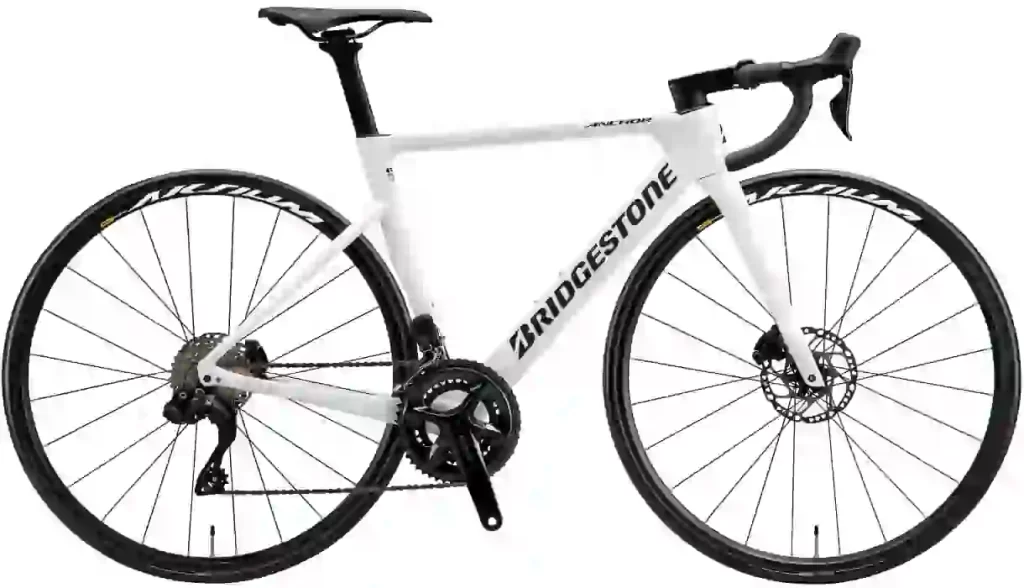
RP8
- Bottom Bracket Type: BB86 Press-Fit (86.5mm width, 41mm bore)
- Frame Material: Carbon Fiber
- Hub Spacing: 130mm QR
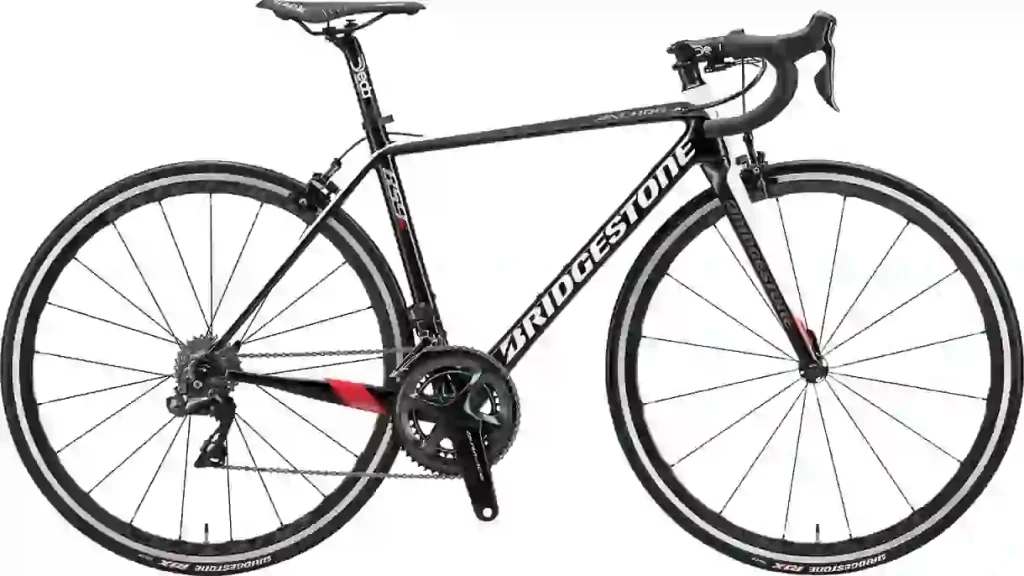
RS9
- Bottom Bracket Type: BB86 Press-Fit (86.5mm width, 41mm bore)
- Frame Material: High-Modulus Carbon
- Hub Spacing: 130mm QR
RS8
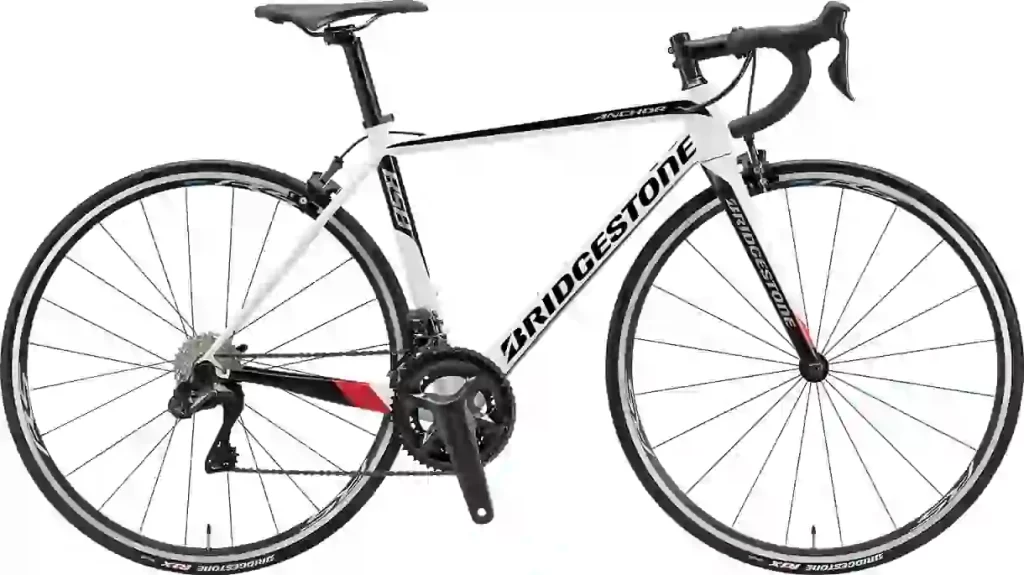
- Bottom Bracket Type: BB86 Press-Fit (86.5mm width, 41mm bore)
- Frame Material: Carbon Fiber
- Hub Spacing: 130mm QR
RS6
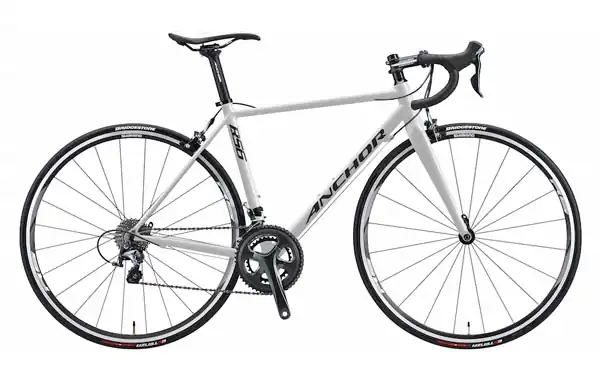
- Bottom Bracket Type: BSA 68mm Threaded
- Frame Material: Aluminum Alloy
- Hub Spacing: 130mm QR
Road Endurance Series
RL8

- Bottom Bracket Type: BB86 Press-Fit (86.5mm width, 41mm bore)
- Frame Material: Full Carbon (980g frame)
- Hub Spacing: 130mm QR
RL8D

- Bottom Bracket Type: BB86 Press-Fit (86.5mm width, 41mm bore)
- Frame Material: Full Carbon
- Hub Spacing: 142mm Thru-Axle
RL6 / RL6D
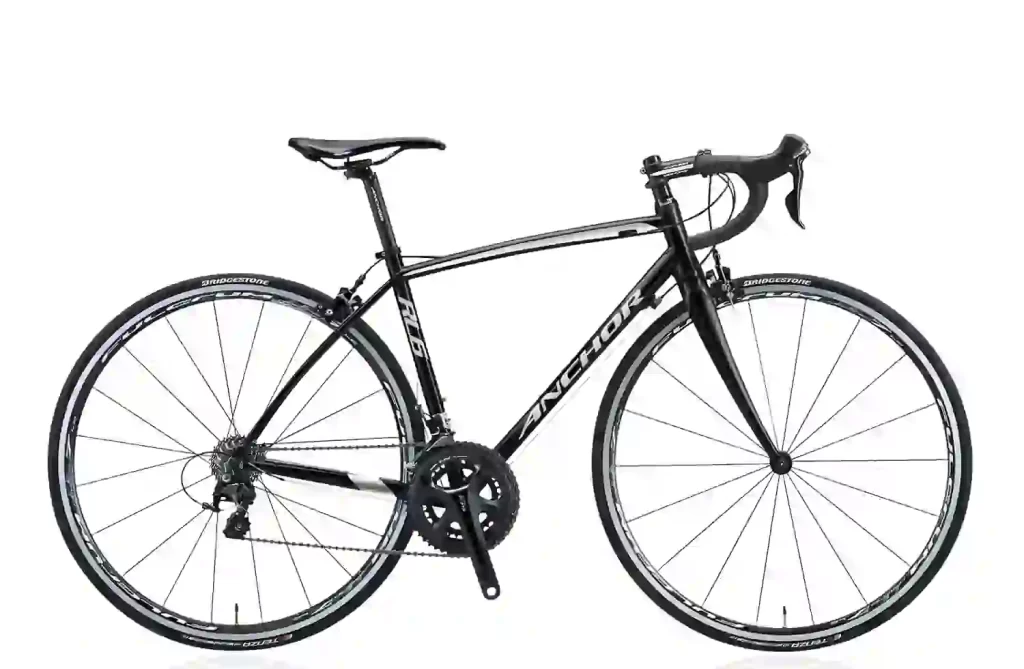
- Bottom Bracket Type: BSA 68mm Threaded
- Frame Material: Aluminum (6061 or 7005 series)
- Hub Spacing: 130mm QR (RL6) / 142mm Thru-Axle (RL6D)
RL3
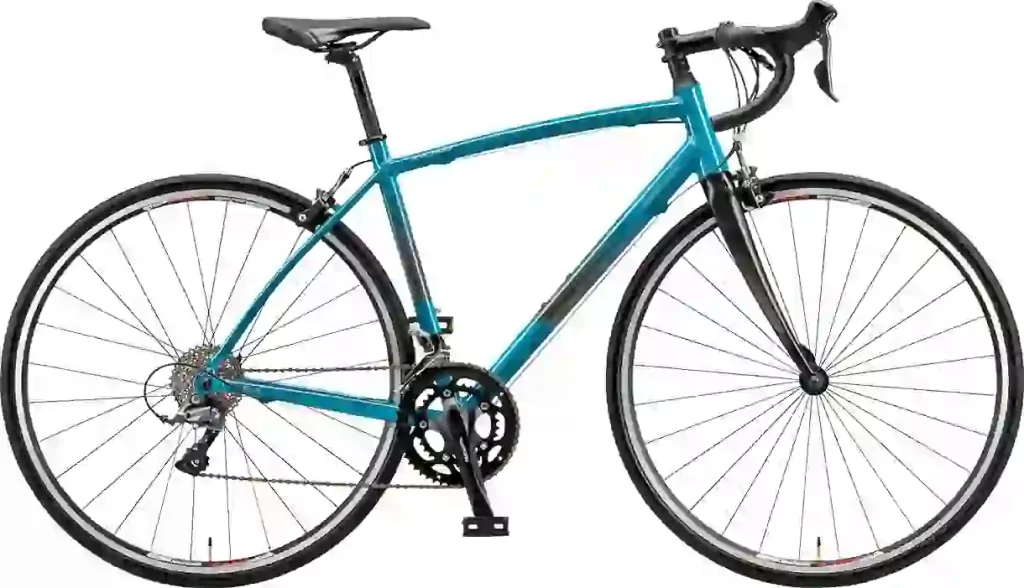
- Bottom Bracket Type: BSA 68mm Threaded
- Frame Material: Aluminum
- Hub Spacing: 130mm QR
Gravel and Adventure Series
CX6

- Bottom Bracket Type: BSA 68mm Threaded
- Frame Material: Aluminum / Carbon Hybrid
- Hub Spacing: 135mm QR
Track and Time Trial Series
PHM9 / HMP9
- Bottom Bracket Type: BSA 68mm Threaded
- Frame Material: High-Modulus Carbon
- Rear Hub Spacing: 120mm (track-specific)
02 Understanding Your Anchor’s Bottom Bracket
The bottom bracket is the single most critical factor in determining whether your Toseven conversion succeeds or fails. Bridgestone Anchor uses a smaller and more focused set of BB standards than brands like Cube or Trek — but within that small set, the differences are significant and the consequences of ordering the wrong hardware are severe.
1 What is a Bottom Bracket?
The bottom bracket (BB) is the hollow, cylindrical tube at the very lowest point of your bicycle frame. It is the structural junction where the downtube, seat tube, and chainstays all converge. On a standard Anchor bicycle, this tube houses bearings that allow your crankset to spin. In a Toseven mid-drive conversion, the entire original crankset — pedal arms, spindle, and bearings — is removed completely. The Toseven DM01 or DM02 motor axle slides directly through this empty tube, and a large steel lockring is threaded onto the axle on the non-drive side, clamping the motor body tightly against the frame. The bottom bracket is no longer a bearing housing. It becomes the primary structural anchor for a motor generating up to 160Nm of rotational force. If the motor does not fit this tube correctly, the installation will fail catastrophically.2 Threaded vs. Press-Fit: The Mechanical Reality
The Threaded Bottom Bracket (BSA)- The Design: The inside of the frame’s BB shell features spiral threads machined directly into the metal.
- The Fit: The internal diameter is approximately 33.6mm to 34.8mm.
- The Toseven Advantage: The Toseven motor axle is manufactured to exactly 33.5mm — natively designed to slide through a BSA shell with virtually zero radial play. Once through, large steel locknuts thread onto the axle and clamp against the flat outer faces of the shell. This is the safest and most mechanically sound conversion interface possible.
- The Design: A press-fit shell has no threads. The inside is a perfectly smooth bore.
- The Fit: Anchor’s press-fit shells have an internal diameter of exactly 41mm and are 86.5mm wide.
- The Engineering Problem: If you slide a 33.5mm Toseven motor axle into a 41mm press-fit bore, the motor floats loosely inside the frame. The immense twisting force of the motor causes it to violently pivot inside the bore, permanently destroying the shell.
- The Solution: You must use CNC High-Precision Reducer Support Bushings — machined metal sleeves that press into the 41mm bore and step it down to exactly 33.5mm.
- Axle Length Requirements: An 86.5mm wide BB86 shell is significantly wider than a standard 68mm frame. A 68mm Toseven motor axle disappears entirely inside the frame with no thread protrusion for the lockring. You must use the 100mm axle motor variant for all BB86 Anchor frames.
3 Anchor Bottom Bracket Standards — Critical Breakdown
BSA 68mm (All Road, Endurance, Gravel, and Track Platforms)
- Internal Diameter: ~33.6mm to 34.8mm (threaded)
- Shell Width: 68mm
- Found On: RS6, RL6, RL6D, RL3, CX6, PHM9, HMP9
BB86 Press-Fit (All Carbon Racing and Endurance Platforms)
- Internal Diameter: 41mm (smooth, threadless bore)
- Shell Width: 86.5mm
- Found On: RP9, RP8, RS9, RS8, RL8, RL8D
4 Why All BB86 Anchor Frames Are Also Carbon Frames
This is the most important pattern in the Bridgestone Anchor lineup: every model that uses BB86 press-fit is a carbon fiber frame, and every model that uses BSA threaded is either aluminum or aluminum/carbon hybrid. This means the two hardware complications — press-fit adapter requirements and carbon frame restrictions — always arrive together on Anchor bicycles. If your Anchor has BB86, it has carbon — and the full advanced protocol applies in its entirety: 100mm axle, CNC bushings, spacer kit, interface pads, DM02 only, 35–40Nm limit.5 What Happens When You Skip the Bushings
The 41mm BB86 bore is 7.5mm wider than the 33.5mm motor axle. Without CNC High-Precision Reducer Support Bushings, the motor floats freely inside the shell. When the motor accelerates, it pivots violently inside the bore on the first hard acceleration event, grinding and gouging the inner wall of the carbon shell. The shell cannot be repaired once this damage occurs. Cheap plastic or 3D-printed adapters are not a substitute — they crush instantly under 90Nm of DM02 torque and cause the same failure.6 What Happens When You Skip the Spacer Kit
Even with correct bushings and the 100mm axle installed into an 86.5mm shell, the lockring runs out of threaded axle before it ever contacts the frame face. The wrench feels tight — but the lockring has bottomed out against the unthreaded shoulder of the axle. The motor is mechanically loose. Under any motor load, it pivots and tears the CNC bushings out of the shell. The 1mm / 2mm Precision Spacer Kit fills this dead axle space, ensuring the lockring achieves full thread engagement and clamping force against the frame face.7 The RL8’s Compliance Liability
Unlike the RP9 and RS9, which are built for maximum stiffness, the RL8 is designed with 20% greater horizontal compliance — Bridgestone intentionally built flex into the frame to absorb road vibration. For a mid-drive motor, this is a structural liability. The motor needs a completely rigid platform to transmit its torque cleanly into the drivetrain. A compliant frame allows the BB shell to flex slightly under motor load, creating micro-movement between the motor casing and the frame — this micro-movement cyclically stresses the carbon at the BB junction and accelerates fatigue cracking over time. Additionally, older RL8 models may have BB shell faces that are not perfectly perpendicular. A professional mechanic must face the shell — machining the faces flat and parallel — before any motor can be safely mounted on an older RL8.03 Mistakes That Can Destroy Your Build
These are the exact failure modes seen on Bridgestone Anchor conversions. Anchor’s all-carbon press-fit lineup means the margin for error is narrower here than on almost any other brand.
- Ordering a 68mm Axle Motor for a BB86 Frame: The RP9, RP8, RS9, RS8, RL8, and RL8D all use BB86 press-fit shells that are 86.5mm wide. A 68mm axle motor disappears entirely inside the frame — zero thread protrusion, zero lockring engagement, zero installation possible. Measure your shell face-to-face with a caliper before placing any order.
- Using Plastic or 3D-Printed Bushings on Carbon BB86 Frames: There is no cost-saving alternative to official CNC-machined metal bushings on Anchor’s carbon press-fit shells. Plastic crushes. 3D-printed nylon deforms. The moment either fails under 90Nm of DM02 torque, the steel motor axle contacts the bare carbon bore and grinds it into an unrepairable oval. The frame is permanently destroyed.
- Skipping the Spacer Kit: The lockring feels tight and the wrench clicks — but it has bottomed out on the axle shoulder and the motor is completely loose. The first hard acceleration tears the bushings out and permanently damages the shell.
- Installing the DM01 on Any Carbon Anchor Frame: Every BB86 Anchor in this guide is carbon. The DM01’s 160Nm will crush every one of them. There are no exceptions based on model year, trim level, or riding intensity.
- Pinching Internal Cables Against the Motor on the RP9, RS8, or RL8: Anchor’s internal cable routing exits close to the BB shell on all of these models. If derailleur cables, brake hoses, or hydraulic lines are trapped between the motor body and the frame, the constant mechanical tension of those cables against the motor casing mimics leg pressure on the torque sensor. The motor delivers erratic, surging power that cannot be corrected without removing the motor and properly routing all cables with protective conduit around the motor block.
- Ignoring the RL8’s Shell Facing Requirement: Mounting a motor on an older RL8 with uneven shell faces without first having them professionally machined flat creates a point contact between the motor and the carbon wall. The clamping force concentrates at a single point and cracks the shell even at the correct 35–40Nm torque limit.
- Attempting to Convert the PHM9 or HMP9: BSA threaded does not mean compatible. The 120mm track rear hub creates an uncorrectable chainline. The absence of brake mounts makes road riding impossible. Do not attempt electrification on these frames.