
Scott Sports Mid-Drive Compatibility Guide — TOSEVEN DM01 / DM02 Engineering Conversion Manual
A drivetrain-systems analysis of every common Scott Sports frame architecture — Spark, Scale, Genius, Ransom, Patron, Strike, Aspect, Addict, Foil, Speedster, Solace, Speedster Gravel, Sub Cross, Sub Sport, Silence — paired with the structural, torsional, and chainline requirements of the TOSEVEN DM01 (160 Nm) and DM02 (90 Nm) mid-drive systems.
Welcome to the definitive engineering manual for electrifying your Scott Sports bicycle. Scott is a brand defined by aggressive race geometry, competition-grade weight targets, and uncompromising carbon optimization — the HMX, HMX-SL, and HMF layups, the integrated TwinLoc cockpit, and the Syncros component ecosystem all exist to shave grams and tighten clearances. That same race-first engineering philosophy makes Scott frames simultaneously some of the most rewarding and some of the most demanding mid-drive conversion platforms in the global market.
Mid-drive motors do not behave like a heavy crankset. They convert your bottom bracket shell from a passive bearing housing into a primary structural anchor that transmits up to 160 Nm of rotational reaction torque directly into the carbon (or alloy) walls of the frame. Before you order a single component, you must identify your exact Scott model, its model-year-specific bottom bracket standard, the carbon grade of the layup, the Boost or non-Boost rear hub spacing, and the chainstay clearance envelope around the BB junction. The success of your build depends entirely on this verification.
- Scott Sports Compatibility Overview & Suitability Status Key
- Model-By-Model Compatibility Lookup Cards
- Frame Material × Bottom Bracket Hardware Matrix
- The Carbon Protocol — HMX / HMX-SL / HMF Pro-Level Warning
- Essential Hardware Checklist
- Critical Operational Rules
- Incompatibility Alerts
- Category 1 — Mountain Bikes (Hardtail)
- Category 2 — Mountain Bikes (Full Suspension)
- Category 3 — Road
- Category 4 — Gravel
- Category 5 — Trekking / Urban / Commuter
- Understanding Your Scott’s Bottom Bracket
- TOSEVEN DM01 / DM02 Integration Engineering
- Mistakes That Can Destroy Your Scott Build
- FAQ & Troubleshooting
1. Scott Sports Compatibility Overview & Suitability Status Key
Scott’s lineup spans four structural realities you must classify before any hardware is ordered: HMX / HMX-SL / HMF carbon race frames; 6061-T6 hydroformed alloy trail and commuter frames; integrated full-suspension carbon platforms with TwinLoc and Horst-link kinematics; and aero-optimized carbon road frames where motor packaging is geometrically impossible.
Every model in this guide is classified under one of four suitability tiers. These tiers are not marketing categories — they are direct outputs of a four-variable engineering check: bottom bracket standard, frame material, suspension clearance envelope, and chainline corrigibility.
Suitability Status Key
| Tier | Engineering Meaning | Conversion Reality |
|---|---|---|
| 🟢 Perfect / Recommended | BSA threaded shell, alloy frame, isotropic strength, no kinematic interference. | Drop-in compatible. Both DM01 and DM02 approved. Minimal or no adapter hardware. |
| 🟡 Moderate | Press-fit BB92 / PF92 alloy, or alloy full-suspension requiring clearance verification. | Requires CNC reducer bushings, 100 mm axle, precision spacer kit, and a mandatory suspension clearance test. |
| 🟠 Advanced | Carbon (HMX / HMX-SL / HMF) frame, often combined with PF86 / PF92 / BB86 press-fit, integrated cabling, and tight chainstay junctions. | DM02 only. Strict 35–40 Nm lockring limit. Protective interface pads non-negotiable. Every press-fit interface uses CNC reducer bushings + 100 mm axle. |
| 🔴 Not Recommended | Aero-tube carbon road frames, integrated motor frames, dedicated TT geometries, ultra-thin race layups with fully internal headset routing. | Conversion is structurally and packaging-wise impossible. Do not attempt under any circumstances. |
2. Model-By-Model Compatibility Lookup Cards
Below is the model-card matrix for every common Scott Sports platform. Locate your exact model, then move to the deep-dive section for the chainstay, internal-routing, and suspension-clearance specifics that decide installation success.
| Scott Model | Category | Status | Approved Motor | Key Engineering Notes |
|---|---|---|---|---|
| Aspect (Alloy) | MTB Hardtail | 🟢 Perfect | DM01 / DM02 | 6061 alloy, BSA 73 mm threaded. Drop-in. Confirm cable exit at BB. |
| Scale 980 / 970 / 960 (Alloy) | MTB Hardtail | 🟢 Perfect | DM01 / DM02 | 6061 alloy, BSA 73 mm threaded on alloy variants. Strong DM01 candidate. |
| Scale RC 900 / 700 (HMX / HMF Carbon) | MTB XC | 🟠 Advanced | DM02 ONLY | HMX/HMF carbon, PF92 press-fit. 100 mm axle + CNC bushings + spacer kit + interface pads. |
| Scale RC SL (HMX-SL Carbon) | MTB XC Race | 🔴 Not Rec. | None | HMX-SL ultralight layup; race-specific BB shell wall thickness too thin even for DM02. |
| Spark 970 / 960 (Alloy) | MTB Full-Sus | 🟡 Moderate | DM01 / DM02 | 6061 alloy, PF92 press-fit. 100 mm axle + CNC bushings + spacer kit. Suspension clearance test mandatory. |
| Spark RC / Spark 900 (HMX / HMF Carbon) | MTB XC / Trail | 🟠 Advanced | DM02 ONLY | HMX/HMF carbon, PF92 press-fit. Full carbon protocol + suspension clearance test. |
| Genius 950 / 930 (Alloy) | MTB Full-Sus | 🟡 Moderate | DM01 / DM02 | 6061 alloy, PF92 press-fit. 100 mm axle + CNC bushings + spacer kit. Long-travel kinematics — verify clearance at full bottom-out. |
| Genius 900 / ST (HMX Carbon) | MTB Trail / Enduro | 🟠 Advanced | DM02 ONLY | HMX carbon, PF92 press-fit. Full carbon protocol + suspension clearance test. |
| Ransom 920 / 910 (Alloy) | MTB Enduro | 🟡 Moderate | DM01 / DM02 | 6061 alloy, PF92 press-fit. 170 mm rear travel — clearance arc is the widest in the lineup. |
| Ransom 900 (HMX Carbon) | MTB Enduro | 🟠 Advanced | DM02 ONLY | HMX carbon, PF92 press-fit. Full carbon protocol + extended-travel clearance test. |
| Patron 920 / 910 (Alloy) | MTB Trail | 🟡 Moderate | DM01 / DM02 | 6061 alloy, PF92 press-fit. Twinloc-2 routing exits near the BB — protect cables. |
| Patron 900 (HMX Carbon) | MTB Trail | 🟠 Advanced | DM02 ONLY | HMX carbon, PF92 press-fit. Full carbon protocol applies. |
| Strike (Alloy / Hybrid) | MTB Trail | 🟡 Moderate | DM01 / DM02 | Legacy 6061 alloy with BSA 73 mm threaded shells on most years — verify before ordering. |
| Addict RC / Addict Pro (HMX-SL Carbon) | Road Race | 🔴 Not Rec. | None | HMX-SL ultra-thin race layup; BB86 press-fit; fully internal headset routing. Catastrophic risk. |
| Addict (HMF Carbon) | Road Endurance | 🟠 Advanced | DM02 ONLY | HMF carbon, BB86 press-fit. 100 mm axle + CNC bushings + spacer kit + interface pads. |
| Foil RC / Foil Pro (HMX / HMX-SL Carbon) | Road Aero | 🔴 Not Rec. | None | Aero tube profiles + integrated cockpit — motor housing cannot be packaged on this frame. |
| Speedster (Alloy) | Road Endurance | 🟢 Perfect | DM01 / DM02 | 6061 alloy, BSA 68 mm threaded. Drop-in. |
| Solace (HMF Carbon — legacy) | Road Endurance | 🟠 Advanced | DM02 ONLY | HMF carbon, BSA 68 mm threaded on most years. No bushings; full carbon protocol. |
| Addict Gravel / Speedster Gravel (Alloy) | Gravel | 🟢 Perfect | DM01 / DM02 | 6061 alloy, BSA 68 mm threaded. Drop-in. |
| Addict Gravel (HMF Carbon) | Gravel | 🟠 Advanced | DM02 ONLY | HMF carbon, BB86 press-fit. 100 mm axle + CNC bushings + spacer kit + interface pads. Flared chainstay clearance must be verified. |
| Sub Cross / Sub Sport (Alloy) | Trekking / Urban | 🟢 Perfect | DM02 Recommended | 6061 alloy, BSA 68 mm threaded. Drop-in. Ideal commuter conversion. |
| Silence (Alloy Step-Through) | Trekking / Urban | 🟢 Perfect | DM02 Recommended | 6061 alloy, BSA 68 mm threaded. Drop-in. |
Several Scott platforms switched bottom bracket standards mid-generation. The Spark moved from BB92 to PF92 between generations; the Scale alloy line retained BSA 73 mm threaded across most years while the Scale RC carbon migrated through BB92 and PF92 variants; the Genius standardized on PF92 across both alloy and carbon. Before ordering any hardware, remove your existing bottom bracket and physically inspect the shell — visible threads mean BSA, a smooth bore means press-fit.
3. Frame Material × Bottom Bracket Hardware Matrix
This matrix collapses the entire Scott Sports lineup into four hardware paths. Every model in the catalog must resolve to exactly one of these four rows.
| Frame Material | Bottom Bracket Standard | Approved Motor | Required Axle | Mandatory Hardware |
|---|---|---|---|---|
| 6061-T6 Aluminum | BSA 68 mm or 73 mm threaded | DM01 or DM02 | 68 mm / 73 mm | Standard kit only. |
| 6061-T6 Aluminum | Press-Fit BB86 / BB92 / PF86 / PF92 | DM01 or DM02 | 100 mm | CNC High-Precision Reducer Support Bushings + 1 mm / 2 mm Precision Spacer Kit. |
| HMX / HMX-SL / HMF Carbon | BSA 68 mm or 73 mm threaded | DM02 ONLY | 68 mm / 73 mm | Protective Interface Pads + 35–40 Nm lockring torque limit. |
| HMX / HMX-SL / HMF Carbon | Press-Fit BB86 / BB92 / PF86 / PF92 | DM02 ONLY | 100 mm | CNC Reducer Bushings + 1 mm / 2 mm Spacer Kit + Protective Interface Pads + 35–40 Nm torque limit. |
4. The Carbon Protocol — HMX / HMX-SL / HMF Pro-Level Warning
Scott’s carbon nomenclature is not marketing — it encodes layup density, fiber modulus, and target wall thickness. You must understand the difference before electrifying any carbon Scott frame.
| Layup | Engineering Profile | Mid-Drive Tolerance |
|---|---|---|
| HMF | High Modulus Fiber. Scott’s standard performance carbon. Used on Addict (endurance), Solace, Addict Gravel, Patron 900, Spark 900. | DM02 compatible with full carbon protocol. Wall thickness adequate for 35–40 Nm clamping load when interface pads are used. |
| HMX | Premium high-modulus carbon. Lighter, stiffer, used on Spark RC, Scale RC 900, Genius 900, Ransom 900, Patron 900 ST. | DM02 only. Strict 35–40 Nm limit. Mandatory protective interface pads. Mandatory torque wrench. |
| HMX-SL | Race-only superlight HMX variant. World-Cup XC and elite road race frames: Scale RC SL, Addict RC, Foil RC. Wall thickness optimized for minimum mass. | 🔴 Not Recommended for any conversion. The localized clamping load of even a properly torqued lockring exceeds the safety margin of the SL layup. |
The TOSEVEN DM01 is strictly prohibited on every Scott carbon frame — HMX, HMX-SL, and HMF, without exception. The 160 Nm reaction torque generated against the BB shell during heavy acceleration induces interlaminar shear in the carbon layup, fractures the resin matrix at the BB junction, and crushes the shell beyond repair. There are no model-specific exceptions, no riding-style exceptions, and no installation workarounds. If your Scott is carbon, the DM02 is the only legal motor.
On approved carbon Scott frames (HMX and HMF only), the DM02 must be installed with: (1) protective interface pads of dense rubber or composite shim material between the motor housing and the bare carbon downtube and BB faces; (2) a precision torque wrench; (3) a strict 35–40 Nm primary lockring torque limit. Exceeding 40 Nm cracks the shell. Falling below 35 Nm leaves the motor mechanically loose and accelerates fatigue cracking.
5. Essential Hardware Checklist
- CNC High-Precision Reducer Support Bushings. Mandatory on every Scott press-fit (BB86 / BB92 / PF86 / PF92) shell. The 41 mm internal bore must be stepped down to 33.5 mm to mate with the TOSEVEN motor axle. Plastic, nylon, or 3D-printed substitutes crush instantly under DM01/DM02 torque and permanently destroy the shell.
- 1 mm / 2 mm Precision Spacer Kit. Mandatory on every 100 mm axle installation. Fills dead axle space between the motor body and the lockring so that the lockring achieves full thread engagement against the frame face rather than bottoming out on the axle shoulder.
- Protective Interface Pads. Mandatory on every carbon Scott frame (HMX / HMF). Distributes the lockring clamping load across a wider surface area and prevents resin point-fracture at the BB junction.
- Precision Torque Wrench (calibrated, 5–60 Nm range). Non-negotiable on carbon builds. The 35–40 Nm carbon lockring window cannot be hit reliably by feel.
- Boost-compatible Offset Chainring (9 mm offset). Mandatory on all Scott Boost 148 mm rear-spacing platforms (Spark, Scale, Genius, Ransom, Patron, Aspect modern variants). Aligns the front chainline to the laterally-shifted rear cassette.
- Protective Cable Conduit. Mandatory on every Scott model with internal routing exiting at or near the BB shell — virtually all modern Spark, Genius, Ransom, Patron, Addict, Foil, and Speedster Gravel platforms.
6. Critical Operational Rules
The 3-Second Calibration Rule
Both the DM01 and DM02 use a strain-resistance torque sensor that samples a zero-load baseline in the 3 seconds immediately following power-on of the T24 display. You must keep all weight off the pedals for at least 3 full seconds after power-on. Resting a foot on the pedal during this window contaminates the baseline; the motor then interprets ordinary pedal weight as input pressure and delivers erratic, surging power on every subsequent ride until the display is recalibrated.
Manual Shifting (DM02)
The DM02 does not include an integrated shift sensor. You — the rider — must consciously pause pedal input for a fraction of a second before every shift. Pausing input drops the torque-sensor reading to zero, the motor backs out of power, the chain transitions cleanly, and full power resumes as you load the pedals again. Shifting under DM02 load will rapidly destroy lightweight Shimano XTR / SRAM XX cassette teeth common on Scale RC and Spark RC platforms.
Suspension Clearance Test (Mandatory on all Full-Suspension Models)
Every full-suspension Scott — Spark, Genius, Ransom, Patron — uses a four-bar / Horst-link kinematic with a lower linkage that pivots forward and downward as the rear shock compresses. This linkage occupies the same physical space the motor housing claims. Before tightening any motor mounting hardware, deflate the rear shock fully and compress the suspension to bottom-out. Visually verify that the lower linkage clears the motor casing through the entire travel arc. Long-travel platforms (Ransom 170 mm, Genius 150–170 mm) sweep the widest arc and require the closest verification.
TwinLoc Cable Management
Scott’s TwinLoc remote-suspension lockout system routes a dedicated cable from the cockpit to the rear shock, often passing across the top of the BB junction. On Spark, Genius, and Ransom platforms, this cable must be verified clear of the motor casing before final tightening. A pinched TwinLoc cable disables the remote-lockout function and, on contact with the rotating motor housing, can be sheared during the first ride.
Chainline and Q-Factor Discipline
Scott’s race-oriented geometry runs tight Q-factors by design. The TOSEVEN motor housing increases Q-factor by approximately 8–12 mm per side compared to a standard Shimano or SRAM crankset. On smaller Scott frame sizes (S and XS — common on Scale, Spark, and Addict), this expansion can interfere with the heel arc during pedaling. Verify your seat tube angle and saddle setback after installation.
7. Incompatibility Alerts
Conversion is Not Recommended. The Foil’s deep-section aerodynamic downtube and integrated front-end cockpit physically prevent the motor housing from clearing the frame in its braced position. Even if a press-fit bushing kit could be sourced, the housing geometry does not fit the Foil’s tube profile envelope.
Conversion is Not Recommended. The HMX-SL ultralight race layup and BB86 press-fit shell present the highest carbon-failure risk in the Scott catalog. Combined with fully internal headset cable routing — which leaves no path for the motor harness — the platform is structurally and packaging-wise incompatible.
Conversion is Not Recommended. The race-only HMX-SL layup achieves its weight target by minimizing wall thickness in the BB shell. Even DM02-level clamping pressure exceeds the verified safety margin.
The 160 Nm DM01 is strictly prohibited on every HMX, HMX-SL, and HMF Scott frame in this guide. The carbon walls of the BB shell will be crushed beyond repair on the first hard acceleration.
8. Category 1 — Mountain Bikes (Hardtail)
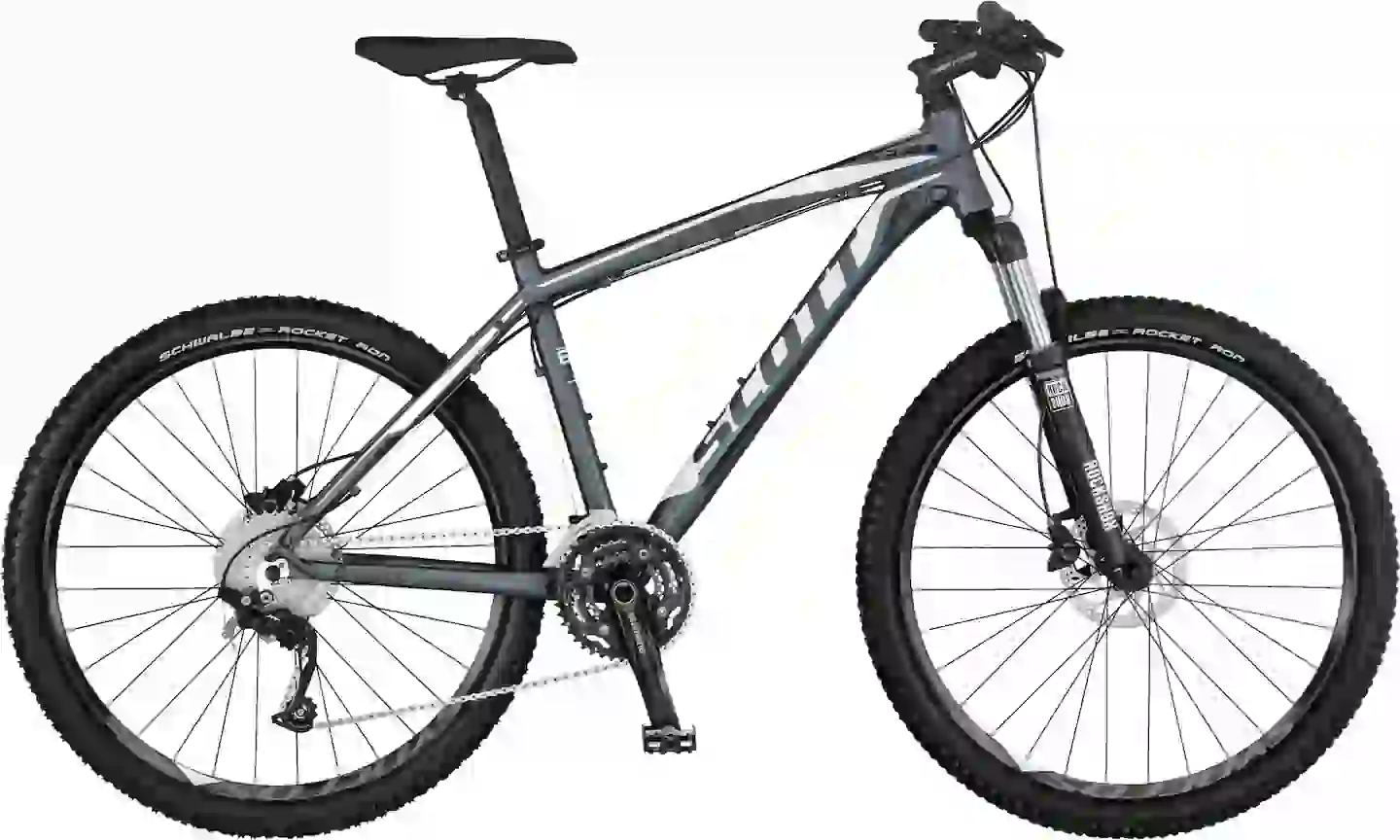
Aspect (Alloy)
🟢 Compatibility Verdict: Easy. The Aspect is one of the strongest entry points in the Scott catalog. The BSA 73 mm threaded shell natively accepts the 73 mm TOSEVEN motor with no adapter hardware. Both DM01 and DM02 are approved.
On Boost-spaced Aspect models, install a 9 mm offset chainring to maintain chainline. On older non-Boost 142 mm variants, a 0 mm offset chainring is correct.
Scale 980 / 970 / 960 (Alloy)
🟢 Compatibility Verdict: Easy. Excellent DM01 candidate. The robust alloy XC platform handles the full 160 Nm output without structural concern.
The Scale alloy frames route both shift and rear-brake cables through internal ports that exit directly under the BB shell. Rotating the motor upward without first sleeving these cables in protective conduit will crush the housing between the motor casing and the downtube. Use the supplied rubber cable sleeves and visually verify routing before tightening any locknuts.
Scale RC 900 / 700 (HMX / HMF Carbon)
🟠 Compatibility Verdict: Advanced. The most demanding convertible hardware combination among Scott hardtails — the Scale RC SL is more critical still, but it is classified Not Recommended and falls outside this verdict tier. You must use the 100 mm axle motor variant, CNC High-Precision Reducer Support Bushings, the 1 mm / 2 mm Precision Spacer Kit, and protective interface pads. DM01 is strictly prohibited. DM02 only, 35–40 Nm lockring limit.
Scale RC SL (HMX-SL Carbon)
🔴 Compatibility Verdict: Not Recommended. The race-only HMX-SL layup has wall thicknesses optimized for sub-900 g frame weight. Localized clamping pressure from any mid-drive motor — even a properly torqued DM02 — is outside the verified safety envelope. Do not attempt conversion.
Strike (Alloy / Hybrid — legacy trail platform)
🟡 Compatibility Verdict: Moderate. The Strike is a discontinued Scott trail/hardtail platform that ran across multiple bottom-bracket and hub generations. On the dominant BSA 73 mm threaded variants the standard 73 mm TOSEVEN motor drops in directly with no adapter hardware, and both DM01 and DM02 are approved on alloy chassis.
Because the Strike spanned multiple production years with running geometry and standards changes, you must physically inspect the BB shell — visible threads mean BSA, a smooth bore means press-fit (which would shift the verdict to the alloy press-fit hardware path: 100 mm axle + CNC reducer bushings + spacer kit). Hybrid carbon-stay variants additionally require chainstay clearance verification at the BB junction before final tightening.
9. Category 2 — Mountain Bikes (Full Suspension)
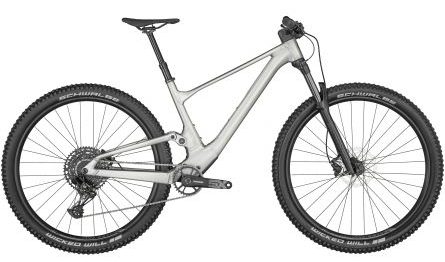
Spark 970 / 960 (Alloy)
🟡 Compatibility Verdict: Moderate. 100 mm axle variant + CNC reducer bushings + precision spacer kit. Both DM01 and DM02 are compatible on the alloy chassis. Suspension clearance test is mandatory — Spark’s integrated shock and lower link sweep close to the BB at full compression.
The Spark routes the TwinLoc cable across the top of the BB junction. Verify this cable is clear of the motor housing through the full travel arc before tightening.
Spark RC / Spark 900 (HMX / HMF Carbon)
🟠 Compatibility Verdict: Advanced. Full carbon protocol applies in addition to all Spark-platform clearance verifications. DM02 only, 100 mm axle, CNC bushings, spacer kit, interface pads, 35–40 Nm. Suspension clearance test mandatory.
Genius 950 / 930 (Alloy)
🟡 Compatibility Verdict: Moderate. Same press-fit hardware path as the alloy Spark. The Genius’s longer rear travel sweeps a wider arc — verify clearance with the rear shock fully deflated and compressed to bottom-out.
Genius 900 / Genius ST (HMX Carbon)
🟠 Compatibility Verdict: Advanced. HMX carbon frame, PF92 press-fit, 150 mm rear travel. Full carbon protocol + extended suspension clearance verification. DM02 only.
Ransom 920 / 910 (Alloy)
🟡 Compatibility Verdict: Moderate. The Ransom is the longest-travel Scott full-suspension platform. The clearance arc at full compression is the widest in the catalog. Confirm the lower linkage does not strike the motor housing at any point through the 170 mm travel range. Both DM01 and DM02 are hardware-compatible on the alloy chassis.
Ransom 900 (HMX Carbon)
🟠 Compatibility Verdict: Advanced. Full carbon protocol + maximum-travel clearance test. DM02 only. Treat the suspension clearance verification as a structural acceptance test, not a courtesy check — at 170 mm of rear travel a single-point linkage strike will shatter the motor housing on a first trail drop.
Patron 920 / 910 (Alloy) and Patron 900 (HMX)
Patron platforms inherit the same PF92 press-fit shell architecture as the Spark and Genius lines. 🟡 Alloy: Moderate. 🟠 Carbon: Advanced. Same hardware path; same suspension and TwinLoc-2 cable verification.
10. Category 3 — Road
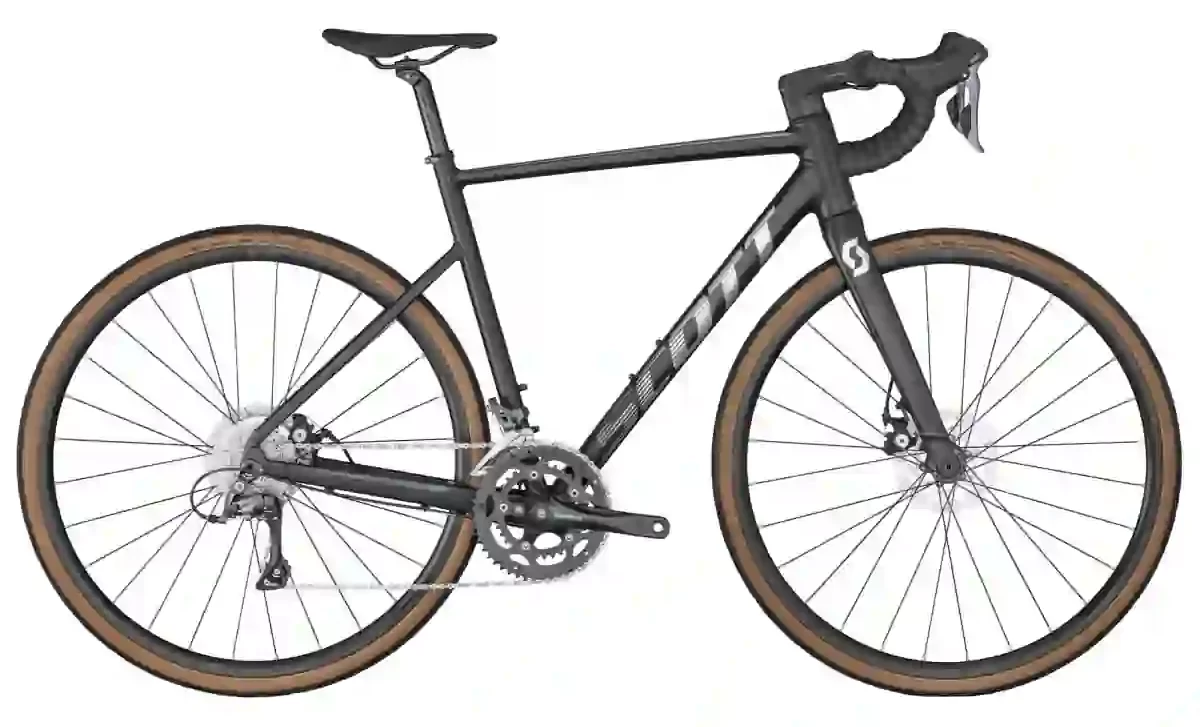
Speedster (Alloy)
🟢 Compatibility Verdict: Easy. The Speedster is the strongest Scott road conversion candidate. BSA 68 mm threaded shell — drop-in compatible with the standard 68 mm TOSEVEN motor. Both DM01 and DM02 approved. Lockring torque can safely reach 60–80 Nm.
Solace (HMF Carbon — discontinued endurance platform)
🟠 Compatibility Verdict: Advanced. The Solace was Scott’s pre-Addict endurance carbon platform and is no longer in current production — apply this verdict only to discontinued Solace frames, not to the current Addict endurance line. The threaded shell removes the press-fit complication, but the HMF carbon material requires the full carbon protocol. DM02 only. Protective interface pads. 35–40 Nm lockring limit.
Addict (HMF Carbon — endurance)
🟠 Compatibility Verdict: Advanced. 100 mm axle + CNC bushings + spacer kit + interface pads. DM02 only. 35–40 Nm.
Addict RC / Addict Pro (HMX-SL)
🔴 Compatibility Verdict: Not Recommended. The Addict RC is Scott’s ultra-light World-Tour race platform. HMX-SL layup, BB86 press-fit, fully internal headset routing. The structural margin is insufficient and the cable-routing path leaves no exit for the motor harness. Do not attempt.
Foil RC / Foil Pro
🔴 Compatibility Verdict: Not Recommended. Aero tube profiles physically prevent motor housing clearance. The integrated front-end cockpit and fully internal cable management leave no viable harness path.
11. Category 4 — Gravel
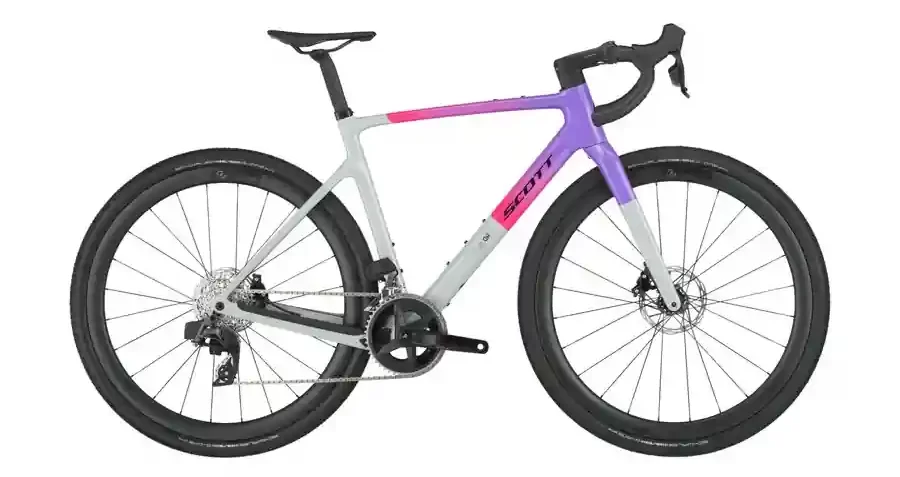
Speedster Gravel / Addict Gravel (Alloy)
🟢 Compatibility Verdict: Easy. 6061 alloy + BSA 68 mm threaded shell. Drop-in compatible with both DM01 and DM02. Excellent commuter / bikepacking conversion platform.
Addict Gravel (HMF Carbon)
🟠 Compatibility Verdict: Advanced. 100 mm axle + CNC bushings + spacer kit + interface pads. DM02 only.
Modern carbon Addict Gravel frames feature flared chainstays for 45 mm+ tire clearance. The TOSEVEN motor’s 133 mm secondary gear housing diameter approaches the inner chainstay edge. Use the 1 mm / 2 mm Precision Spacer Kit to push the motor slightly outboard on the drive side and verify housing-to-chainstay clearance before tightening. If clearance is marginal, relocate spacers from the non-drive side to the drive side until clear.
12. Category 5 — Trekking / Urban / Commuter
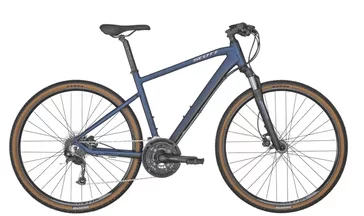
Sub Cross / Sub Sport (Alloy)
🟢 Compatibility Verdict: Easy. 6061 alloy + BSA 68 mm threaded. Drop-in compatible. The DM02 is the recommended pairing for commuter drivetrains — its 90 Nm output is more than sufficient for urban riding and the manual-shifting discipline preserves cassette life on Shimano Alivio / Deore commuter groupsets.
Silence (Alloy Step-Through)
🟢 Compatibility Verdict: Easy. Alloy + BSA 68 mm threaded. Drop-in compatible. Ideal urban conversion. DM02 strongly recommended.
13. Understanding Your Scott’s Bottom Bracket
1. What is a Bottom Bracket?
The bottom bracket (BB) is the hollow cylindrical tube at the lowest structural junction of the bicycle frame, where the downtube, seat tube, and chainstays converge. On a stock Scott, this tube houses bearings supporting the crankset spindle. In a TOSEVEN mid-drive conversion, the entire crankset, spindle, and bearing assembly are removed; the motor’s 33.5 mm steel axle slides through the empty shell, and a steel lockring on the non-drive side clamps the motor housing tightly against the frame’s BB faces. The BB stops being a bearing housing and becomes the primary structural anchor for up to 160 Nm of reaction torque.
2. Threaded (BSA) vs. Press-Fit — The Mechanical Reality
BSA Threaded (68 mm and 73 mm)
The interior of the shell carries machined spiral threads. Internal diameter ~33.6–34.8 mm. Shell width 68 mm (road) or 73 mm (MTB / gravel). Found on the Aspect, Scale alloy, Speedster, Speedster Gravel, Solace, Sub Cross, Sub Sport, Silence, and most legacy Strike platforms. The TOSEVEN motor axle is manufactured to exactly 33.5 mm — designed to slide through a BSA shell with virtually zero radial play. Steel locknuts thread directly onto the axle and clamp against the flat shell faces. This is the safest mid-drive interface.
Press-Fit BB86 / BB92 / PF86 / PF92
The interior of the shell is a smooth, threadless bore. Internal diameter exactly 41 mm. Shell width 86.5 mm (road / gravel — BB86 / PF86) or 91.5–92 mm (MTB — BB92 / PF92). Found on the Spark, Scale RC carbon, Genius, Ransom, Patron, Addict, Addict Gravel carbon. The 33.5 mm motor axle floats inside a 41 mm bore — a 7.5 mm radial gap. Without intervention, the motor pivots violently inside the shell on the first acceleration, gouging the bore into an unrepairable oval.
The solution. CNC High-Precision Reducer Support Bushings — machined metal sleeves pressed into the 41 mm bore that step it down to 33.5 mm. The axle length problem. An 86.5 mm or 92 mm wide press-fit shell is too wide for a 68 / 73 mm motor axle — the axle disappears inside the frame with insufficient thread protrusion for the lockring. The 100 mm axle motor variant is mandatory on every Scott press-fit frame.
3. PF86 vs. BB86, PF92 vs. BB92 — Why Scott Uses Both
BB86 and BB92 are the original press-fit standards (cup pressed into the frame). PF86 and PF92 are the Pressfit-30 derivative — slightly larger external diameter, accommodating a 30 mm crank spindle in stock form. From a TOSEVEN-conversion perspective, all four behave identically: all four use a 41 mm internal bore, all four require CNC reducer bushings, all four require the 100 mm axle, all four require the precision spacer kit. The only practical difference is shell width — 86.5 mm on road/gravel, 91.5–92 mm on MTB — which is already accounted for by the 100 mm axle.
4. Boost Spacing and Chainline Engineering
“Boost” refers to a 148 mm rear-hub width (vs. legacy 142 mm non-Boost or 135 mm QR). The Boost 148 standard pushes the rear cassette 3 mm outboard. To align the front chainline with this laterally-shifted cassette, you must install a 9 mm offset chainring on the TOSEVEN motor. Using a 0 mm offset chainring on a Boost-spaced Scott (Spark, Scale, Genius, Ransom, Patron, modern Aspect) pulls the chain at an aggressive diagonal under load, shortens chain life dramatically, and causes derailleur skip and front-ring derailment.
5. Why Scott’s Race Geometry Matters
Scott designs race-oriented frames with the lowest possible chainstay length, the shortest possible BB drop, and the tightest possible chainstay-to-tire clearance. This is a competitive advantage on the trail and a structural complication for mid-drive integration. Three specific consequences:
- Stress concentration at the BB junction. Short chainstays mean the BB shell sits closer to the rear-axle reaction load. Adding mid-drive reaction torque to this already-loaded junction makes the carbon BB protocol non-negotiable.
- Chainstay clearance for the 133 mm motor housing. Tight chainstay clearance on Scale RC, Spark RC, and Addict Gravel frames may interfere with the motor’s secondary gear housing. Drive-side spacing is the recovery path.
- Q-factor expansion. Pedaling biomechanics shift after motor installation — the rider’s stance widens by 8–12 mm per side, altering knee tracking. On smaller XS/S Scott frames, verify saddle setback after installation.
14. TOSEVEN DM01 / DM02 Integration Engineering
14.1 Motor Mounting Geometry
Both the DM01 and DM02 mount through the BB shell with the motor body braced upward against the underside of the downtube. The mounting plate, secured by two M6 anti-rotation bolts, transfers reaction torque from the motor body into the frame. The braced angle is typically 35–45° forward of vertical, producing a net upward moment that resists the motor’s natural tendency to spin downward under load.
14.2 Anti-Rotation Stabilization
The lockring alone does not prevent the motor from rotating around its own axle under load. The anti-rotation plate (DM01) or anti-rotation bracket (DM02) — bolted to the underside of the downtube — provides the second mechanical anchor. On Scott carbon frames, this bracket must be installed with a layer of protective interface pad between the bracket and the bare carbon downtube. On alloy frames, a thin rubber gasket is sufficient.
14.3 Controller and Harness Routing
The DM01 and DM02 share an external wiring harness exiting the motor body on the non-drive side. On Scott full-suspension platforms (Spark, Genius, Ransom, Patron) the harness must route along the underside of the downtube, secured at three or four points with rubber-isolated cable clamps to prevent vibration-induced abrasion. On Scott road platforms with internal headset routing (Addict, Foil), the harness has no internal path and must run externally — which is one reason the Addict RC and all Foil variants are not recommended for conversion.
14.4 Heat Dissipation
The DM01 dissipates up to 320 W of waste heat at sustained full output; the DM02 dissipates up to 180 W. Both motors rely on the alloy housing as the primary heat-rejection surface. Do not wrap the motor body in protective foam or insulation. On carbon Scott frames, ensure the protective interface pad is positioned only between the lockring face and the BB shell — not around the motor body.
14.5 Battery Positioning Physics
Battery placement is constrained by the Scott main triangle geometry. The race-oriented Scale RC, Spark RC, and Addict Gravel frames have small front triangles on sub-480 mm frame sizes — battery placement may be restricted to the underside of the downtube on these platforms. On Aspect, Genius, Ransom, Patron, Speedster, Sub Cross, and Silence platforms, in-triangle battery mounting is straightforward. The added battery mass should be located as low as possible to keep the system center of gravity near the BB.
14.6 Weight Distribution Analysis
The DM01 weighs ~3.8 kg; the DM02 weighs ~3.0 kg. Battery packs add 2.5–3.5 kg. The total system mass (~5.5–7.3 kg) is concentrated at the BB shell — the lowest, most-central point of the frame — which preserves Scott’s race-tuned handling balance better than a hub motor or rack battery would. Riders converting Scale RC and Spark RC platforms should expect a noticeable but not handling-destroying shift in cornering feel.
14.7 Suspension Interaction (Full-Suspension Platforms)
On Spark, Genius, Ransom, and Patron frames, the motor housing occupies space adjacent to the lower swingarm linkage. Two failure modes must be eliminated before final tightening:
- Static interference — the linkage contacts the motor at full bottom-out. Eliminated by the suspension clearance test.
- Dynamic interference — the linkage clears at static bottom-out but contacts during high-frequency suspension cycling under load. Eliminated by leaving a minimum 5 mm clearance between linkage and motor at full compression.
14.8 Q-Factor and Pedaling Biomechanics
The DM01 produces a Q-factor of approximately 175 mm; the DM02 approximately 170 mm. Compared to a stock Shimano XTR crankset (~168 mm), the rider’s stance widens by 2–7 mm per side. On Scott race-geometry frames in XS and S sizes, this may alter knee-tracking line — verify after the first 50 km of riding and adjust saddle setback if knee discomfort develops.
15. Mistakes That Can Destroy Your Scott Build
- Ordering a 68 / 73 mm axle motor for a press-fit Scott frame. Every Spark, Scale RC carbon, Genius, Ransom, Patron, Addict, and carbon Addict Gravel uses a press-fit shell 86.5–92 mm wide. A 68 / 73 mm axle disappears inside the frame with insufficient thread protrusion for the lockring. Measure shell width face-to-face with a caliper before ordering.
- Using plastic or 3D-printed bushings on a press-fit Scott carbon frame. There is no cost-saving alternative to CNC-machined metal bushings on Scott’s carbon press-fit shells. Plastic crushes; printed nylon deforms. The motor axle then contacts the bare carbon bore directly and grinds it into an unrepairable oval on the first hard acceleration.
- Skipping the precision spacer kit. The lockring will torque to spec on the axle shoulder rather than the frame face, and the motor will be mechanically loose. The first hard acceleration tears the bushings out and destroys the shell.
- Installing the DM01 on any HMX, HMX-SL, or HMF Scott frame. The 160 Nm output crushes the carbon BB shell on the first hard acceleration. There are no model exceptions.
- Attempting conversion of an HMX-SL race frame (Scale RC SL, Addict RC, Foil RC). The wall thickness margin is below the safe-clamping threshold. No protocol — including DM02-only, interface pads, and 35 Nm — recovers the safety margin.
- Ignoring the suspension clearance test on Spark, Genius, Ransom, or Patron. Lower-linkage contact at full bottom-out shatters the motor housing on the first trail drop.
- Pinching internal cables (or the TwinLoc cable) against the motor body. On Scott platforms with cables exiting at the BB, mechanical tension from a pinched cable mimics leg pressure on the torque sensor and produces erratic surging power. Sleeve all cables in protective conduit and verify clearance before final tightening.
- Skipping the 9 mm offset chainring on Boost-spaced Scott platforms. Chainline is pulled diagonally under motor load; chain skip, derailleur trauma, and front-ring derailment follow.
- Attempting conversion of the Foil or Addict RC. Aero tube profiles and integrated cockpit routing do not accommodate a mid-drive motor housing or harness. No protocol recovers the geometric and structural impossibility.
16. FAQ & Troubleshooting
1. My Scott is HMX carbon. Can I install the DM01?
No — strictly prohibited. The HMX layup, like HMX-SL and HMF, is engineered for tensile pedaling forces, not the localized compressive force of a 160 Nm reaction-torque mounting interface. The DM01 will crush the BB shell beyond repair on the first hard acceleration. Use the DM02 with the full carbon protocol: protective interface pads, 35–40 Nm primary lockring torque, calibrated torque wrench. For HMX-SL frames (Scale RC SL, Addict RC, Foil RC), even the DM02 is outside the verified safety envelope — do not attempt conversion at all.
2. My Scott is alloy with a press-fit BB92 shell. Can I still convert it?
Yes — alloy press-fit frames (Spark 970/960, Genius 950/930, Ransom 920/910, Patron 920/910) are fully convertible with mandatory hardware. The 41 mm smooth bore must be stepped down to 33.5 mm using CNC High-Precision Reducer Support Bushings. The 92 mm shell width requires the 100 mm axle motor variant. The 1 mm / 2 mm Precision Spacer Kit ensures the lockring achieves full thread engagement against the frame face. With all three pieces in place, the alloy chassis safely handles either DM01 or DM02. Skipping any one of these three components results in a loose motor that destroys the shell on first acceleration.
3. Why is the Foil not recommended even with the DM02?
The Foil’s rejection is not a torque problem — it is a packaging problem. The aero downtube profile is shaped like a teardrop in cross-section, with a deep vertical depth and a narrow horizontal width. The TOSEVEN motor housing simply does not fit against this tube profile in its braced position. The fully integrated cockpit and headset cable routing leave no exit path for the motor harness. No combination of bushings, spacers, and pads recovers the geometric mismatch.
4. What does PF92 mean and how is it different from BB92 on my Scott?
BB92 and PF92 both have a 41 mm internal smooth bore and a 91.5–92 mm shell width. BB92 was Shimano’s original press-fit standard for MTB; PF92 is the Pressfit-30 derivative supporting 30 mm crank spindles in stock form. From a mid-drive conversion standpoint, the two are functionally identical: both require CNC reducer bushings stepping down 41 mm to 33.5 mm, both require the 100 mm axle, and both require the precision spacer kit. You do not need to identify which subvariant your Scott uses — the hardware path is the same.
5. Do I need a shift sensor for the DM02 on my Spark or Scale RC?
No — and one is not included or required. The DM02’s 90 Nm output does not generate the chain-snapping torque levels that necessitate the DM01’s integrated shift sensor. However, you must shift manually with discipline: pause pedal input for a fraction of a second before every shift. The torque sensor reads the pause as zero load, drops motor output, and the chain transitions cleanly. Shifting under DM02 load destroys lightweight Shimano XTR / SRAM XX cassette teeth typical on Scale RC and Spark RC builds within a few hundred kilometers.
6. My motor surges erratically. What did I miss?
Two probable causes on Scott platforms:
- The 3-second calibration rule was violated. If you rested a foot on the pedals during the 3 seconds after T24 power-on, the torque sensor’s zero baseline is contaminated. Power down, lift both feet completely off the pedals, power up, wait 3 full seconds, then begin pedaling. If the issue persists, perform a full sensor recalibration via the T24 menu.
- Cable interference at the BB junction. Scott’s internal routing — especially on Spark, Genius, Patron, and Addict — exits at or near the BB shell. A pinched derailleur cable, brake hose, or TwinLoc cable trapped between the motor casing and the frame transmits mechanical tension into the motor body. The torque sensor misinterprets this constant tension as leg pressure and delivers erratic surging power. Remove the motor, sleeve all cables in protective conduit, route them clear of the motor body, and reinstall.
7. Can I install a mid-drive on my full-suspension Spark or Genius?
Yes — alloy variants (Spark 970/960, Genius 950/930) are 🟡 Moderate compatibility, carbon variants (Spark RC, Genius 900) are 🟠 Advanced. Both demand the suspension clearance test as a non-negotiable acceptance step. Deflate the rear shock fully. Compress the suspension to bottom-out by leaning on the saddle. Visually inspect the gap between the lower swingarm linkage and the motor housing through the entire travel arc. If at any point the linkage contacts the motor casing — even by 1 mm — rotate the motor slightly downward away from the downtube and retest. A linkage strike at full compression on a trail drop will shatter the motor housing.
8. The TOSEVEN motor housing contacts my Spark RC chainstay before the lockring engages. What now?
This is a Scott race-geometry consequence — the Spark RC, Scale RC, and carbon Addict Gravel run tight chainstay clearances near the BB. The recovery path is the 1 mm / 2 mm Precision Spacer Kit on the drive side: relocate spacers from the non-drive to the drive side, pushing the motor housing slightly outboard until chainstay clearance is restored. After spacing, recheck chainline with a chainring offset appropriate for the displaced position.
9. What is the most common mistake on Scott carbon conversions?
Over-torquing the lockring. Builders accustomed to alloy frames apply 60–80 Nm out of habit. On HMX or HMF Scott carbon, this exceeds the 35–40 Nm safe-clamping window and cracks the BB shell — sometimes immediately, sometimes after 50–100 km of fatigue cycling. The crack propagates from the BB face inward along the resin matrix. There is no field repair. Use a calibrated torque wrench. Stay within 35–40 Nm. Apply the lockring against a protective interface pad, not against bare carbon.
10. My Scott Addict’s BB face feels uneven. Should I face it before installing the motor?
Yes. Older Addict frames (and the Solace and legacy Speedster Carbon platforms) may have BB shell faces that are not perfectly perpendicular to the bore axis from manufacturing tolerances. Mounting a motor against an uneven face concentrates the lockring clamping load at a single point of contact rather than distributing it across the full annular face. On carbon, this single-point contact cracks the shell at the correct 35–40 Nm torque. Have the BB shell professionally faced and chased by a qualified mechanic before installing any mid-drive motor on an older Scott carbon platform.
Engineered by the TOSEVEN Drivetrain Systems team. This guide consolidates the Scott Sports compatibility matrix, frame architecture analysis, and TOSEVEN DM01 / DM02 integration engineering protocols. Verify your specific frame, model year, bottom bracket standard, and rear hub spacing before ordering any conversion hardware.
Internal references — TOSEVEN Engineering Series · Volume 01: Bridgestone Anchor Compatibility · Volume 02: Canyon Compatibility · Volume 03: Cube Compatibility · Volume 04: Scott Sports Compatibility (this manual).