1. The Chemistry of Cold: Why Your Range Disappears
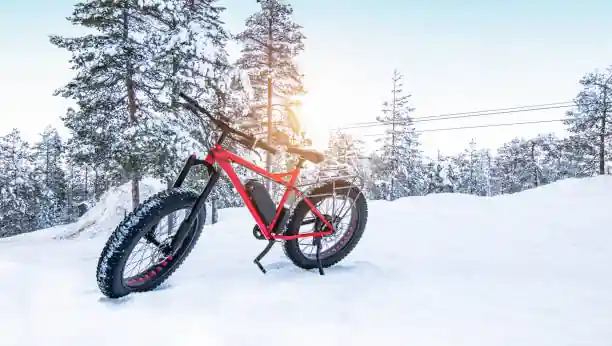
Winter riding is not just a test of rider endurance; it is a battle against battery chemistry. The most immediate effect of cold weather on an electric bicycle is extreme voltage sag. Inside a lithium-ion cell, lithium ions travel through a liquid electrolyte between the anode and cathode. As the ambient temperature drops, this liquid electrolyte becomes highly viscous, significantly slowing down the internal electrochemical reactions. This increased internal resistance artificially suppresses the battery’s voltage output under load.
The impact on your commuting range is entirely predictable. A comprehensive 2024 simulation on bicycle energy expenditure demonstrated that at 0°C (32°F), the cycling range of a standard pedelec drops by over 20% compared to its baseline at 20°C (68°F). As temperatures drop further to -10°C (14°F), which represents the recommended operational limit for most commercial lithium-ion batteries, only 60% of the nominal battery capacity remains available. Plan your winter routes assuming you have significantly less capacity than your display indicates.
The Role of Thermal Covers
To combat voltage sag during riding, neoprene battery covers act as a thermal jacket. While they do not generate heat, they trap the natural internal heat generated by the battery’s own electrical discharge. A 5mm neoprene sleeve can maintain internal cell temperatures 5°C to 8°C higher than ambient air, preserving crucial commuting range on rides lasting longer than thirty minutes.
2. The Danger Zone: Lithium Plating and Charging
Riding your e-bike in freezing temperatures temporarily restricts your range, but charging a freezing battery destroys its internal chemistry permanently. The predominant cause of capacity loss in lithium-ion cells is the loss of lithium inventory at the negative electrode, which is accelerated by the formation of an insulating solid electrolyte interphase (SEI) layer.
When you attempt to force electricity into a cold battery, the sluggish lithium ions cannot successfully intercalate (absorb) into the graphite anode fast enough. Instead, they pile up on the surface of the anode and form solid, metallic lithium. This destructive process is known as lithium plating. It permanently traps cyclable lithium, irreversibly degrading the battery’s maximum capacity. Worse, these metallic deposits can form sharp, microscopic dendrites that eventually pierce the internal separator, leading to catastrophic short circuits and potential fire hazards.
Strict Winter Charging Protocol
To preserve your battery’s lifespan, you must adopt a strict thermal management routine during the winter months:
- Temperature Equalization: Never plug your e-bike battery into a charger immediately after a winter ride. Detach the battery, bring it indoors, and allow it to sit at room temperature for at least 2 to 3 hours. The dense chemical core of a battery pack takes significantly longer to warm up than the external plastic casing.
- Partial State of Charge (SoC): If you do not plan to ride for several days, do not leave the battery sitting fully charged in a cold garage. Store it indoors at roughly 50% to 60% charge to minimize calendar aging and structural stress on the cells.
- Regenerative Braking Hazards: If your hub-motor e-bike features regenerative braking, be aware that advanced Battery Management Systems (BMS) will deliberately disable this feature when the battery core drops near freezing. Pushing uncontrolled kinetic charge back into cold cells triggers the exact same destructive lithium plating as a wall charger.
3. The Friction Penalty: Tires, Fluids, and Aerodynamics
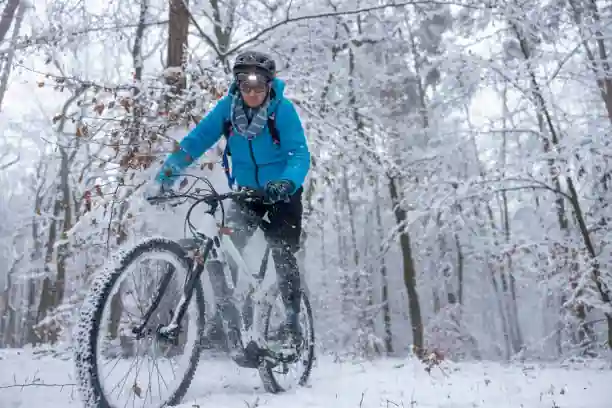
Your battery is not the only component fighting the cold. Winter riding introduces severe mechanical and aerodynamic drag penalties that force your motor to consume significantly more watt-hours per kilometer.
As temperatures drop, the rubber compounds in standard bicycle tires harden and lose their elasticity. This prevents the tire casing from deforming and absorbing road imperfections efficiently, resulting in a sharp increase in rolling resistance. Furthermore, cold air is dramatically denser than warm air, increasing aerodynamic drag against the rider. A combined 10°C drop in ambient temperature results in a 10% to 15% increase in total energy expenditure just to maintain the exact same riding speed.
Viscosity and Drivetrain Resistance
Temperature drops fundamentally alter the state of the fluids inside your bicycle’s mechanical systems, causing cascading performance drops across the entire bike:
- Motor Gearbox Grease: Mid-drive motors use specific high-temperature greases to lubricate their internal reduction gears. Below freezing, this grease thickens dramatically, forcing the motor to overcome its own internal fluid resistance. You may notice the motor sounds mechanically louder or feels sluggish for the first few kilometers until the internal heat of the stator warms the gearbox.
- Hydraulic Brake Fluid: Mineral oil brakes (used by Shimano and Magura) become noticeably sluggish in extreme cold. The fluid viscosity increases, making the levers feel stiff and slow to return. DOT fluid (used by SRAM) resists cold better but absorbs ambient moisture over time, which can freeze and expand inside the hydraulic lines.
- Suspension Damping: The oil in suspension forks thickens in sub-zero temperatures, heavily restricting the flow through the rebound and compression circuits. Your suspension will feel stiff and largely unresponsive unless you have the fork serviced with a lighter-weight winter oil.
- LCD Display Sluggishness: The nematic fluid inside Liquid Crystal Displays (LCDs) thickens in the cold. You will notice “ghosting” where numbers take several seconds to refresh. This is normal and harmless, but it restricts real-time metric tracking until the display warms up.
4. Torque Delivery on Low-Friction Surfaces
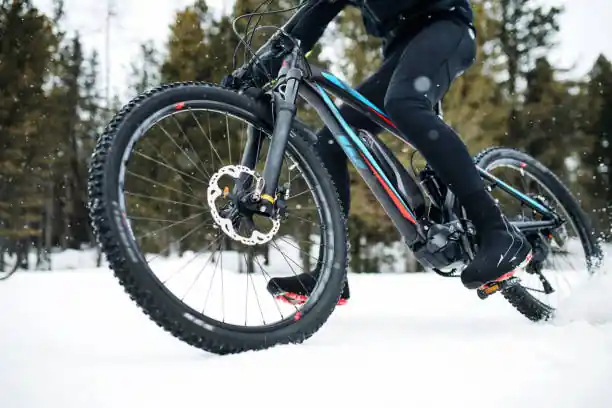
An electric motor fundamentally changes how a bicycle interacts with snow and ice. A mid-drive motor amplifies human pedal input with instantaneous digital response, meaning a sudden spike in torque—such as standing up to pedal away from a stoplight—can immediately break the rear wheel’s traction on black ice.
Standard bicycle tires reach their glass transition temperature in sub-zero weather, turning the rubber blocky and unresponsive. This reduces the coefficient of friction to near zero. When 90 to 160 Nm of torque is delivered to a contact patch the size of a thumb, catastrophic wheel slip is inevitable.
Winter Traction Protocols
- Carbide Studded Tires: Do not attempt to commute on icy roads with standard rubber. Studded tires feature hundreds of tungsten carbide core pins that bite physically into ice. Drop your tire pressure by 5 to 10 psi to force the studs wider and increase the total contact patch.
- PAS Modulation: Lower your Pedal Assist System (PAS) levels in snow and slush. Operating in “Turbo” or “Boost” modes makes the power delivery too aggressive for low-friction surfaces. Dialing back the assist forces you to rely more on mechanical gearing, which delivers smoother, more predictable rotational torque to the rear wheel.
- Higher Gear Starting: When pulling away from a dead stop on packed snow, shift into a slightly heavier gear than you normally would. A heavier gear lowers the mechanical leverage at the rear wheel, reducing the likelihood of spinning out under initial motor acceleration.
5. Thermal Shock and Internal Condensation
One of the most overlooked hazards of winter e-biking is the transition phase. Bringing a bicycle stored at -10°C directly into a 20°C heated apartment or office triggers an immediate physical reaction: the ambient moisture in the warm indoor air instantly condenses on the freezing metal surfaces of the bike, just like water forming on the outside of a cold glass in summer.
This condensation does not only form on the outside of the frame. It forms inside the motor casing, inside the battery rail contacts, and underneath the LCD display screen. Repeated thermal shock cycles lead to microscopic water droplets pooling directly on the Printed Circuit Boards (PCBs). Over the course of a winter season, this trapped moisture causes rapid oxidation and phantom electrical shorts.
Moisture Mitigation Strategies
- Staging Zones: If possible, do not bring a freezing e-bike directly into a highly heated living space. Leave the bike in a transitional temperature zone, such as an unheated mudroom, enclosed porch, or insulated garage, allowing the metal to warm up gradually without drawing aggressive condensation.
- Battery Isolation: Always remove the battery before bringing the bike indoors. This protects the most expensive component from sudden thermal shock and allows you to wipe down the connection rails immediately if moisture does form.
- Active Wipedown: If you must bring a freezing bike into a warm room, keep a microfiber towel ready. Wipe down the motor housing, battery cradle, and display screen as the condensation forms to prevent water from wicking past the rubber housing seals.
6. Drivetrain Maintenance and Salt Mitigation
Winter roads are covered in salt, chemical de-icers, slush, and abrasive grit. When this mixture lands on an e-bike drivetrain, it forms an aggressive grinding paste. Combined with the high torque generated by modern mid-drive motors, this abrasive paste will destroy a steel chain, an alloy chainring, and a rear cassette in a matter of weeks if left unmanaged.
Winter Drivetrain Defense Checklist
- Heavy Wet Lube: Dry and wax-based lubricants wash away immediately in winter slush. Switch to a high-viscosity wet lube engineered specifically for extreme conditions. Apply it generously to the inner chain rollers, let it soak, and aggressively wipe away all excess on the outside plates to prevent grit from sticking to the chain.
- Dielectric Grease: Apply dielectric grease to your battery terminal pins and external display connections to block moisture and stop salt ingress from causing resistance faults.
- Low-Pressure Wash: Never use a high-pressure hose on an e-bike, especially in winter. Pressurized water easily bypasses the protective seals on the bottom bracket, motor housing, and hub bearings. Use a low-pressure garden sprayer filled with warm water to gently rinse corrosive salt off the frame after a ride.
- Fender Extensions: Standard bicycle fenders are entirely insufficient for the 25 to 45 km/h speeds generated by an e-bike in winter slush. Add mudflap extensions to the front fender to block the salt spray from hitting the mid-drive motor casing, bottom bracket junction, and battery mount directly.
References
Hyttinen, J., Rothhämel, M., Jerrelind, J., & Drugge, L. (2024). Simulation of transient rolling resistance of bicycle tyres at various ambient temperatures. PLOS ONE, 19(5), e0302821. https://doi.org/10.1371/journal.pone.0302821
Yarimca, G., & Cetkin, E. (2024). Review of Cell Level Battery (Calendar and Cycling) Aging Models: Electric Vehicles. Batteries, 10(11), 374. https://doi.org/10.3390/batteries10110374