
1. What is an e-bike?
An e-bike is a regular bicycle with an integrated electric motor and battery that assists your pedaling. It does not replace the effort of cycling — it amplifies it, making hills easier, distances longer, and commutes less exhausting. You still ride it exactly like a normal bike.
2. What makes an e-bike different from a regular bicycle?
The difference is a motor, a battery, and a control system — all integrated into the frame. On the outside, most e-bikes look nearly identical to regular bikes. The motor is hidden at the wheel or pedal axle, the battery is often built into the frame or mounted on the downtube, and a small display on the handlebars lets you control the assist level. That is it — everything else works exactly the same.
3. How does pedal assist actually work?
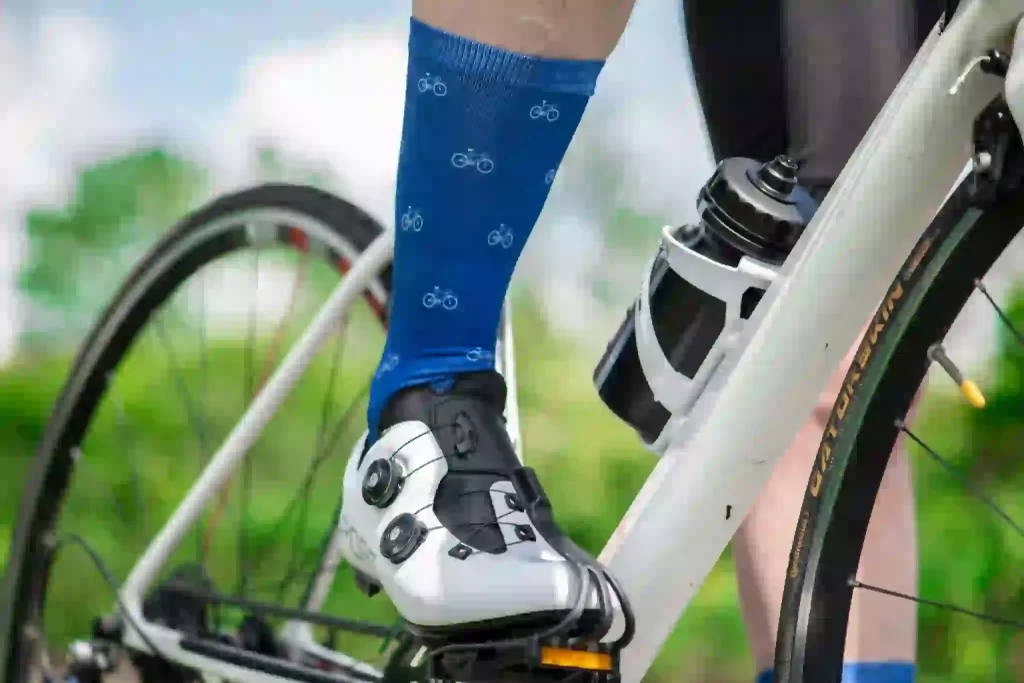
When you pedal, a sensor detects your movement or effort and signals the motor to add power on top of your own. The motor does not take over — it works alongside you. The moment you stop pedaling, the motor stops too. This is what separates a pedal-assist e-bike from a moped or scooter.
4. What is the difference between pedal assist and a throttle?
Pedal assist only activates when you are pedaling — it is the standard system on most e-bikes globally. A throttle lets the motor move the bike without any pedaling at all, like a scooter. Throttles are common on some US market e-bikes but restricted or banned in the EU, where only pedal-assist systems qualify as bicycles legally.
5. Is riding an e-bike still good exercise?
Yes — more than most people expect. On Eco mode, a mid-drive reduces your required effort by around 30–50%, keeping your heart rate comparable to a brisk walk. On Turbo mode, your effort drops to roughly 20–25% of an unassisted rider. You burn fewer calories per kilometre — that is the honest truth — but research consistently shows e-bike riders ride more frequently and cover greater distances, meaning total weekly exercise often ends up higher, not lower.
6. Do I need a license to ride an e-bike?
In most countries, no. A standard e-bike with a 250W motor that cuts assistance at 25 km/h is legally classified as a bicycle in the EU — no license, registration, or insurance required. In the USA, Class 1 and Class 2 e-bikes require no license in most states. Higher-powered builds or speed pedelecs may be regulated differently — always check your local laws.
7. What do the numbers on an e-bike battery label actually mean?
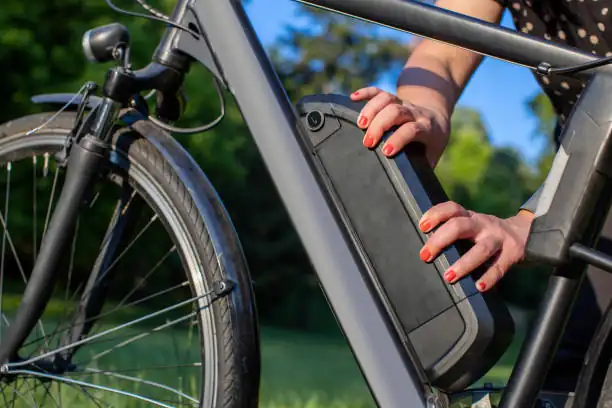
A battery label typically shows three numbers: Voltage (V), Amp-hours (Ah), and Watt-hours (Wh). Voltage is the electrical pressure — 36V suits light urban use, 48V is the most common and efficient standard, and 52V is used for higher performance. Amp-hours indicate how long the battery can sustain output. Multiply the two together and you get Watt-hours — the single most useful number, as it tells you the total energy stored. A 48V × 15Ah battery equals 720Wh.
8. What is torque (Nm), and why does it matter more than Watts?
Torque measures the rotational force the motor applies — it is what determines how easily the bike climbs hills and carries loads. A motor with 85 Nm will outperform one with 60 Nm on every steep hill, even if the lower-torque motor has a higher wattage rating. Nm is the honest number; Watts is the marketing number.
9. What is the difference between nominal and peak power?
Nominal power is the continuous output the motor sustains safely — the number used for legal classification. Peak power is a short burst produced during acceleration or hard climbing. A motor rated 250W nominal may peak at 500W or more. Always compare nominal figures when evaluating motors against each other.
10. What are the two main types of e-bike motors?
All e-bike motors fall into two categories: hub motors, which sit inside the wheel and drive it directly, and mid-drive motors, which sit at the pedal axle and drive the chain using the bike’s gears. Every other difference in performance, feel, efficiency, and price flows from this single distinction.
11. What is a hub motor, and who is it best for?
A hub motor is built into the center of the front or rear wheel and drives it directly without interacting with the bike’s gears. It is simpler, cheaper, easier to maintain, and works well on flat terrain. It is the best choice for urban commuters who want a reliable, low-cost, low-maintenance system on mostly flat roads.
12. What is a mid-drive motor, and who is it best for?
A mid-drive motor sits at the center of the bike — at the pedal axle — and drives the chain, using the bike’s own gears to multiply its force. It is more efficient on hills, delivers a more natural ride feel, and keeps the bike’s weight balanced. It is the best choice for hilly routes, cargo loads, off-road riding, and anyone who wants performance and range over simplicity.
13. What is the main advantage of a mid-drive over a hub motor?

A mid-drive motor uses the bike’s gears — shift into a low gear on a hill and the motor’s torque is multiplied at the wheel, just like a car engine staying in its power band. A hub motor cannot do this. It works at a fixed ratio regardless of terrain, which is why hub motors struggle on steep climbs while mid-drives handle them with ease.
14. Does a mid-drive motor wear out the bike faster?
It wears the chain, cassette, and chainring faster than a hub motor, because the motor’s full torque passes through the drivetrain with every pedal stroke. Using an e-bike-rated chain and replacing it regularly — typically every 1,000–2,000 km — prevents the wear from spreading to more expensive components. The motor itself is sealed and long-lasting.
15. What are the main types of e-bikes available?
E-bikes come in six main categories, each designed for a specific type of riding:
- City / Commuter Upright geometry, integrated lights, fenders, and racks. Built for daily urban use.
- Mountain (e-MTB) Full or hardtail suspension, aggressive geometry, high-torque mid-drive motors. Built for off-road trails.
- Cargo Extended or reinforced frames designed to carry heavy loads, children, or commercial goods.
- Folding Compact frames that fold for storage in apartments, offices, or car boots. Ideal for mixed transit commuters.
- Hybrid / Trekking Versatile bikes that balance comfort and performance for both urban and light off-road use.
- Road / Speed Pedelec Lightweight, performance-oriented bikes that assist up to 45 km/h, designed for fast long-distance riding.
16. What is an e-MTB, and how is it different from a regular e-bike?
An electric mountain bike is built specifically for off-road trails — with full suspension to absorb rough terrain, reinforced frames to handle jumps and drops, and a high-torque mid-drive motor that delivers power precisely through technical sections. The mid-drive placement keeps weight central and low, which is critical for control on steep, uneven terrain.
17. What is a cargo e-bike, and what can it carry?
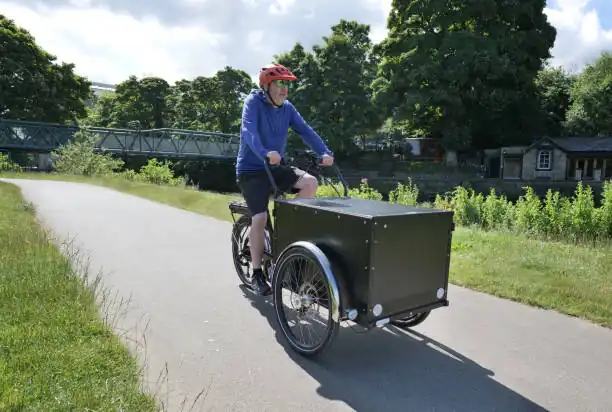
A cargo e-bike is a purpose-built electric bike with an extended or reinforced frame designed to carry heavy loads — groceries, children, delivery packages, or commercial goods. High-torque mid-drive motors are the standard choice for cargo e-bikes, as they provide the sustained power needed to move heavy loads uphill without overheating. A well-designed cargo e-bike can carry 150–300 kg total load.
18. What is a folding e-bike, and is it worth it?
A folding e-bike has a hinged frame that collapses into a compact package in seconds — small enough to carry onto public transport, store under a desk, or fit in a car boot. They are ideal for urban commuters who combine cycling with trains or buses. The trade-off is a smaller battery, smaller wheels, and a slightly less comfortable ride compared to full-size e-bikes.
19. What is a Speed Pedelec, and do I need one?
A Speed Pedelec is an e-bike with a motor that assists up to 45 km/h instead of the standard 25 km/h. They are designed for fast commuters and long-distance riders who want to cover ground quickly. In the EU, they are legally classified as mopeds — requiring registration, insurance, a helmet, and in some countries a license. Most riders do not need one unless speed is a primary priority.
20. How long does an e-bike battery last?
A battery typically endures 500–1,000 full charge cycles before capacity noticeably degrades — roughly 3–5 years of regular use. The motor and frame will outlast the battery by many years. When range starts dropping significantly, the battery can be replaced without replacing the entire bike.
21. How do I extend my battery’s lifespan?
Avoid regularly charging to 100% or discharging below 20% — keeping the battery between 20–80% for daily use significantly extends its life. Store it at around 50% charge during long periods of inactivity, and keep it away from extreme heat or freezing temperatures. Never leave it on the charger overnight indefinitely.
22. How far can I go on a single charge?

A typical e-bike covers between 50 km and 120 km on a single charge, depending on battery capacity, assist level, terrain, and rider weight. Mid-drive motors generally deliver more range than hub motors on the same battery, because they use the bike’s gears to stay efficient rather than fighting terrain directly.
23. Can I ride an e-bike in the rain?
Yes — most quality e-bikes carry an IP65 rating, meaning they handle rain and water spray from any direction without issue. Everyday wet weather riding is completely safe. Avoid pressure washing, and always ensure battery connector ports are properly seated before riding in heavy rain.
24. What happens when the battery runs out?
The bike becomes a regular bicycle — you can still ride it, just without motor assistance. It will feel slightly heavier than a standard bike due to the motor and battery weight, but it is completely rideable. You are never stranded; you simply pedal home.
25. How do I prevent my e-bike from being stolen?
Use a high-quality U-lock through the frame and rear wheel — never just the wheel alone. Always remove the battery when parking in public, as it is both a theft deterrent and protects a valuable component. A GPS tracker hidden inside the frame adds recovery ability if the worst happens.